


SKU #47531
·
66 views
York
Hazelnut
Oregon State UniversityUser rating
0 votes0% positive reviews
No ratings yet — be the first.
Nut; Shape
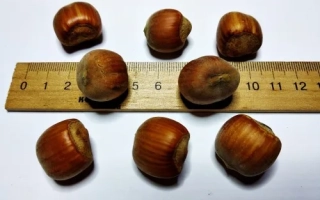
Round
Registration year
2022
About product

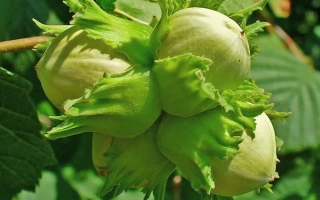
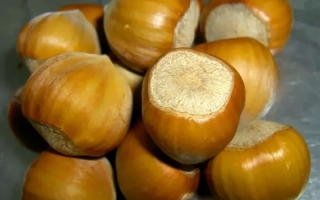
Engineered for high-yield commercial production, York features a uniform round shape that maximizes efficiency in mechanized harvesting and processing.
Nut; Shape
Round
Registration year
2022
Description
York Hazelnut: The Industrial Choice from Oregon State University
The York hazelnut variety, developed by Oregon State University, is a testament to precision breeding designed to meet the rigorous demands of commercial orchards. For growers focusing on efficiency and high-quality yield, York offers a reliable solution that balances biological resilience with logistical convenience.
The Advantage of Uniformity
The hallmark of the York variety is its consistent, round shape. In modern hazelnut production, shape is a commercial determinant: round nuts are significantly more efficient to calibrate, process, and pack. By choosing a variety with high roundness uniformity, producers significantly reduce mechanical sorting errors and potential damage during the cleaning process.
- Mechanical Harvesting Compatibility: The tree structure and nut drop patterns are optimized for modern harvesting equipment, allowing growers to reduce reliance on manual labor and lower operational costs.
- Market Readiness: The uniformity of York nuts makes them highly desirable for commercial processing, including roasting and confectionary use, where standardized size ensures even processing.
- Genetic Excellence: With the backing of Oregon State University’s research, this variety offers a strong resistance profile, reducing the need for intensive chemical applications and promoting a more sustainable orchard management practice.
Operational Scenarios
York is best deployed in high-intensity commercial orchards where profitability is driven by mechanization and product consistency. Whether the goal is dry-in-shell sales or kernel production, York’s predictable performance makes it a staple for long-term agricultural planning. Its ability to maintain high kernel quality year-over-year positions it as a cornerstone for growers aiming for premium-tier market access.
Specifications
| Nut; Shape | |
|---|---|
| Registration year | 2022 |
| Catalog | Catalog → Hazelnut |
| Manufacturer | Oregon State University |
| Country | USA |
Store offers
Prices are updated on loadLoading offers…
Aggregator catalog: prices are collected automatically from store websites, normalized by AI and converted at the current exchange rate. Before ordering, confirm the price and availability on the store's website. This block is not indexed by search engines — the data is loaded after the page opens.
Not yet комментариев. Be the first!






See also
Often considered together with this variety



Recently viewed
Products you’ve viewed on this site
Reviews · 0