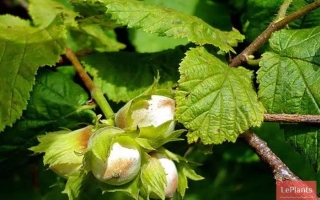
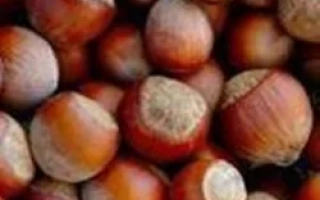
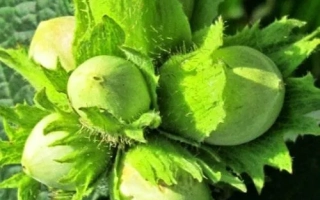
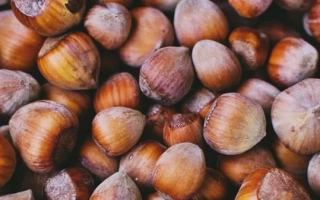
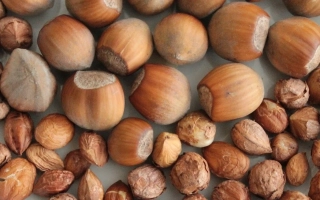
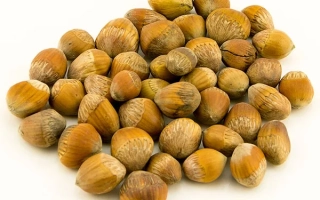
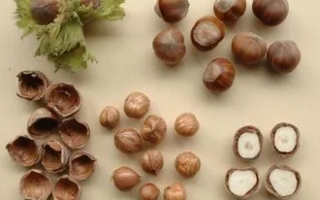
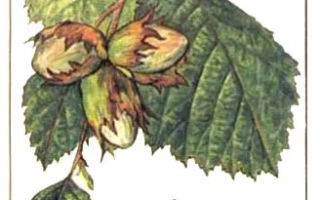
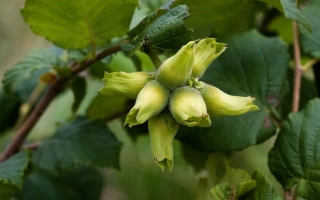
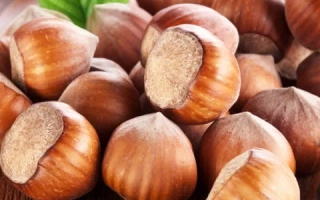
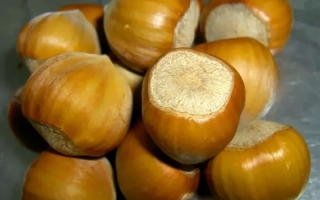
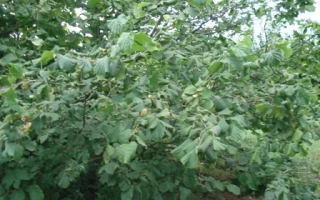
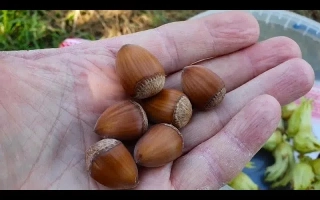
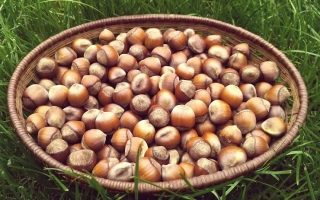
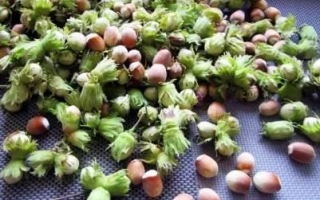
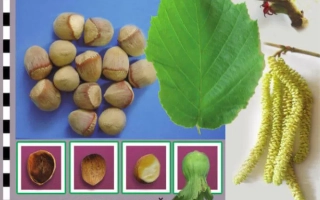
The Borovskyi hazelnut variety is a late-maturing cultivar developed at the Kharkiv Research Institute of Agro-Land Reclamation and introduced in 1967. The bushes of this variety are tall, reaching up to 6 meters in height, with a pyramidal, moderately dense crown distinguished by compact arrangement of skeletal branches. Leaves are large, elongated-oval in shape, with smooth surfaces and slightly hairy undersides. Flowering is prolonged; female flowers are grouped in clusters of 6-8 with bright burgundy stigmas, while male flowers form spikes up to 10 cm long. The variety exhibits high resistance to frost, drought, and pests such as the hazelnut weevil, bud mite, and sawfly. The fruits of the Borovskyi variety are large, up to 3 cm long and 2.5–3 g in weight, with an elongated-conical shape, creamy color, and pleasant nutty flavor. The nuts are grouped in clusters of 2–6, with medium-thick, light-brown shells and dense kernels making up approximately 48% of the nut’s weight. Kernel oil content reaches 69–70%, protein content — 16–17%. The nuts ripen at the end of August, easily detaching from the shell after ripening. Fruits are well preserved for up to three years without losing their consumer qualities. The Borovskyi variety is characterized by high yield — up to 1.5 tons of dry nuts per hectare — rapid fruiting, and stable fruiting. Bushes are not prone to overcrowding and produce little sprouting, simplifying care. The plant is hardy, thrives in harsh climates, and possesses high winter hardiness. For optimal yield, it is recommended to plant several varieties of hazelnut and linden alongside for mutual pollination, as this is a dioecious plant requiring wind and insect pollination.