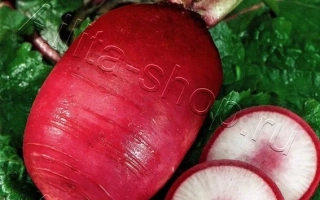
Daikon is a Japanese radish that has become popular on the Ukrainian table in recent years thanks to its delicate taste and beneficial properties. The root vegetable has an elongated shape and a snow-white shade, making it attractive both fresh and when preparing dishes.
One of the key advantages of daikon is its richness in calcium and ability to facilitate the removal of kidney stones, as well as support liver health. In cooking, it is distinguished by a soft, slightly sweet taste, unlike spicier varieties of radish. Thanks to this, it goes perfectly with lemon juice or olive oil when raw and is easily served in salads.
When thermally processed, daikon retains its crunchy flesh: it can be stewed, pickled, boiled, or fried. The "White Long Minovaza" variety is distinguished by medium maturity (65–70 days), root length of 40–60 cm, and a dense, juicy texture. It is resistant to bolting and heat-resistant, which makes it convenient for storage for up to 30 days at a temperature from 0 °C to +8 °C.
Thus, daikon is a versatile root vegetable that combines nutritional properties, beneficial effects on the body, and wide culinary possibilities.