

SKU #56410
·
32 views
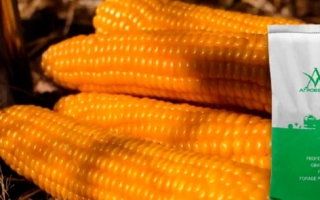
PROKHLAGNENSKIY 175 SV
Corn
Селекционно-семеноводческий Центр ОтборUser rating
0 votes0% positive reviews
No ratings yet — be the first.
FAO
90–1240
Ripening
75-85 days
Hybrid Type
Three-line hybrid
Kernel Type
Intermediate, Flint, Dent, Yellow
About product

PROKHLAGNENSKIY 175 SV — an early-maturing, three-row corn hybrid for general use, intended for grain and silage production. Developed jointly with leading breeding institutions and registered in the State Register for use across various regions of Russia, including the Northwestern, Volga, West Siberian, and Far Eastern regions. The vegetation period ranges from 80 to 114 days depending on the re…
FAO
90–1240
Ripening
75-85 days
Hybrid Type
Three-line hybrid
Kernel Type
Intermediate, Flint, Dent, Yellow
Description
PROKHLAGNENSKIY 175 SV — an early-maturing, three-row corn hybrid for general use, intended for grain and silage production. Developed jointly with leading breeding institutions and registered in the State Register for use across various regions of Russia, including the Northwestern, Volga, West Siberian, and Far Eastern regions. The vegetation period ranges from 80 to 114 days depending on the region, enabling the hybrid to successfully adapt to various climatic conditions. Plants reach a height of 260–280 cm, with ears attached at a height of 130–140 cm, facilitating harvesting and high yields.
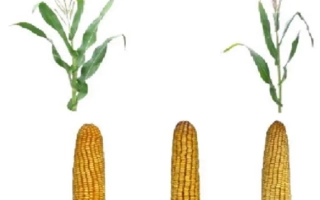
The hybrid exhibits high resistance to major corn diseases, such as downy mildew and ear diseases, as well as damage from corn stem borer. Ears are of medium length, cylindrical in shape with short or medium stalks, containing a medium number of rows of kernels. Kernel type is intermediate, closer to flint or dent, with yellow or orange coloration. Anthocyanin pigmentation of various plant parts, including the first leaf sheath, roots, and ear husk, varies from weak to moderate, which is a distinctive feature of this hybrid.
PROKHLAGNENSKIY 175 SV demonstrates high yield potential, significantly exceeding standards in various regions. Average standardized dry matter yield reaches 112.2 c/ha in the Northwestern region and 104.6 c/ha in the Volga region, with dry matter content varying from 23.5% to 35.8%. Grain moisture at harvest ranges from 27.5% to 28.7%, ensuring high product quality. Due to its characteristics and versatility, the hybrid is widely used for producing high-quality grain and silage, making it an attractive choice for agricultural producers.
The hybrid exhibits high resistance to major corn diseases, such as downy mildew and ear diseases, as well as damage from corn stem borer. Ears are of medium length, cylindrical in shape with short or medium stalks, containing a medium number of rows of kernels. Kernel type is intermediate, closer to flint or dent, with yellow or orange coloration. Anthocyanin pigmentation of various plant parts, including the first leaf sheath, roots, and ear husk, varies from weak to moderate, which is a distinctive feature of this hybrid.
PROKHLAGNENSKIY 175 SV demonstrates high yield potential, significantly exceeding standards in various regions. Average standardized dry matter yield reaches 112.2 c/ha in the Northwestern region and 104.6 c/ha in the Volga region, with dry matter content varying from 23.5% to 35.8%. Grain moisture at harvest ranges from 27.5% to 28.7%, ensuring high product quality. Due to its characteristics and versatility, the hybrid is widely used for producing high-quality grain and silage, making it an attractive choice for agricultural producers.
Crop & resistance
Crop
Disease resistance
Pest resistance
Specifications hover over for a hint about the specification
|
FAO
FAO
Corn hybrids are classified by maturity groups and by the FAO number. All corn hybrids are distributed according to the FAO scale. Under Central European conditions, a difference of 10 FAO units between hybrids results in a 1-2 day difference in their maturity. The higher the FAO... |
90–1240 |
|---|---|
| Ripening | 75-85 days |
| Hybrid Type | |
|
Kernel Type
Kernel Type
Dent corn (Zea mays indentata) — Large, elongated, flat kernels. The endosperm is horny on the sides of the kernel, mealy in the center and at the top. A depression forms at the top of the kernel upon ripening. Dent corn is the most widely cultivated group among others. Plants ty... |
|
|
Use Direction
Use Direction
Dual-purpose hybrids: for silage and grain in all growing regions. These are "stay-green" type hybrids, meaning the plants remain green for a longer period. However, this does not affect the sugar, cellulose, and hemicellulose content, nor the degree of lignification of the plant... |
|
| Registration year | 2020 |
| Catalog | Catalog → Corn |
| Manufacturer | Селекционно-семеноводческий Центр Отбор |
| Country | Russia |
Store offers
Prices are updated on loadLoading offers…
Aggregator catalog: prices are collected automatically from store websites, normalized by AI and converted at the current exchange rate. Before ordering, confirm the price and availability on the store's website. This block is not indexed by search engines — the data is loaded after the page opens.
Not yet комментариев. Be the first!
Alternatives
Maize seeds · similar varieties




See also
Often considered together with this variety





Recently viewed
Products you’ve viewed on this site
Reviews · 0