


SKU #69447
·
40 views
Trifon
Clover
ФГБНУ Федеральный Аграрный Научный Центр Северо-востока имени Н.В. РудницкогоUser rating
0 votes0% positive reviews
No ratings yet — be the first.
Usage Type
Feed on green mass
Flower Color
Pink
Variety Characteristics
High protein content, Resistant to fungal diseases
Registration year
2014
About product

Trifon is a type of red clover (Trifolium pratense L.) of the single-cut type, created through breeding work using infection backgrounds to increase disease resistance. The variety is characterized by medium stem length and thickness with very sparse hairiness, as well as a large number of internodes. Leaves have medium size, with white markings on the leaf blade observed in many plants. Infloresc…
Usage Type
Feed on green mass
Flower Color
Pink
Variety Characteristics
High protein content, Resistant to fungal diseases
Registration year
2014
Description
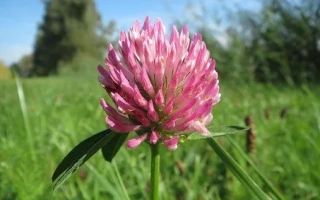
Trifon is a type of red clover (Trifolium pratense L.) of the single-cut type, created through breeding work using infection backgrounds to increase disease resistance. The variety is characterized by medium stem length and thickness with very sparse hairiness, as well as a large number of internodes. Leaves have medium size, with white markings on the leaf blade observed in many plants. Inflorescences are pink, and seeds are multicolored. The flowering time for Trifon is average, which ensures optimal conditions for harvest collection. The Trifon variety is included in the State Register of Breeding Achievements and is approved for use in the Volga-Vyatsky, Northern, and Northwestern regions. It shows high dry matter yield—averaging 68 c/ha, which is 5 c higher than the standard average. The maximum yield was recorded in 2013 and amounted to 119 c/ha in the second year of the grassland life, exceeding the Kretunovsky standard. Protein content in the plant reaches 17%, which corresponds to the level of standard varieties, while protein collection is 8.8 c/ha. An advantage of the Trifon variety is its high productivity and disease resistance, making it economically beneficial for agricultural production. Thanks to the average flowering period and good winter hardiness, this variety is suitable for cultivation in various climatic conditions of the aforementioned regions. Trifon is recommended for use in forage production, providing high-quality raw material with high protein content and stable yield.
Crop & resistance
Crop
Disease resistance
Specifications
| Usage Type | |
|---|---|
| Flower Color | |
| Variety Characteristics | |
| Registration year | 2014 |
| Catalog | Catalog → Clover |
| Manufacturer | ФГБНУ Федеральный Аграрный Научный Центр Северо-востока имени Н.В. Рудницкого |
| Country | Russia |
Store offers
Prices are updated on loadLoading offers…
Aggregator catalog: prices are collected automatically from store websites, normalized by AI and converted at the current exchange rate. Before ordering, confirm the price and availability on the store's website. This block is not indexed by search engines — the data is loaded after the page opens.
Not yet комментариев. Be the first!


Flamingo
ФГБНУ Федеральный Аграрный Научный Центр Северо-востока имени Н.В. Рудницкого
036 1 offer
14.66 €per 1 kg ≈ 755 ₴



See also
Often considered together with this variety


GORODETSKAYA
ФГБОУ ВО Нижегородская государственная сельскохозяйственная академия
060 1 offer
2.21 €per 1 kg ≈ 114 ₴

Recently viewed
Products you’ve viewed on this site
Reviews · 0