


SKU #67633
·
34 views
Veda
Cherry, Sour Cherry
User rating
0 votes0% positive reviews
No ratings yet — be the first.
Ripening Period
Late (July – August)
Fruit Color
Dark Red
Fruit Size
Medium (4–6 g)
Flavor
Sweet
About product

Veda cherry is a winter-hardy variety of Russian breeding, characterized by high frost resistance and capable of withstanding temperatures down to -30°C. The tree is of medium height, reaching up to 2.5 meters, with a spreading, dense, and rounded crown. Shoots have an olive-gray hue, while leaves are large, oval-shaped, with a smooth matte surface and leathery texture. Flowers are white, gathered…
Ripening Period
Late (July – August)
Fruit Color
Dark Red
Fruit Size
Medium (4–6 g)
Flavor
Sweet
Description
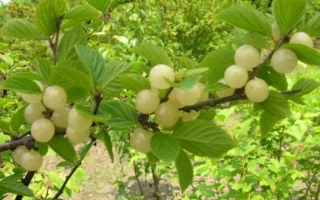
Veda cherry is a winter-hardy variety of Russian breeding, characterized by high frost resistance and capable of withstanding temperatures down to -30°C. The tree is of medium height, reaching up to 2.5 meters, with a spreading, dense, and rounded crown. Shoots have an olive-gray hue, while leaves are large, oval-shaped, with a smooth matte surface and leathery texture. Flowers are white, gathered in inflorescences of three pieces. Fruiting begins in the 4th–5th year after planting, while harvest ripening occurs at the end of July. Veda cherry berries are of medium size, weighing about 5 grams, with a heart-shaped form and dark-red color, featuring a smooth tender skin and barely visible subcutaneous dots. The fruit pulp is dark-red, juicy, tender, and sweet, with a tasting score of about 4.0–4.6 points. The stone separates easily from the pulp, and the pedicel detaches dry. The berry juice is also dark-red in color. The variety yields high — averaging 7.7 centners per hectare, which corresponds to approximately 23 kg per tree, with a maximum yield of up to 66 kg. Veda cherry is undemanding and resistant to diseases such as cockle and moniliosis, however it is susceptible to grey mold and powdery mildew. The cherry is self-sterile and requires the presence of pollinators, which include varieties Bryanchka, Tyutchevka, Michurinka, Iput, Leningradskaya Chernaya, and Revna. Berries are suitable for fresh consumption and are widely used for canning, making juice, compotes, and jams, making the variety universal in application.
Video · 4 videos
Suggest a video →Crop & resistance
Disease resistance
Specifications hover over for a hint about the specification
|
Ripening Period
Ripening Period
It takes 70-100 days until pepper reaches flowering stage, 130-160 days until technical fruit ripeness, and 135-180 days until physiological ripeness. |
Late (July – August) |
|---|---|
| Fruit Color | |
| Fruit Size | Medium (4–6 g) |
| Flavor | |
| Flesh Firmness | |
| Core | |
| Disease Resistance | |
|
Yield
Yield
Overall bulb harvest per unit area. Depends on both onion variety characteristics and agronomic practices, fertilizers, and irrigation. Under optimal growing conditions, an onion yield of 100 tons per hectare and above is not considered record-breaking. |
High (25–40 kg) |
| Tree Growth Power | |
| Assignment | |
| Registration year | 2009 |
| Catalog | Catalog → Cherry, Sour Cherry |
| Legal data |
Show · 1
|
| Country | Russia |
Store offers
Prices are updated on loadLoading offers…
Aggregator catalog: prices are collected automatically from store websites, normalized by AI and converted at the current exchange rate. Before ordering, confirm the price and availability on the store's website. This block is not indexed by search engines — the data is loaded after the page opens.
Not yet комментариев. Be the first!
Alternatives
Cherry saplings · similar varieties


See also
Often considered together with this variety




Recently viewed
Products you’ve viewed on this site
Reviews · 0