
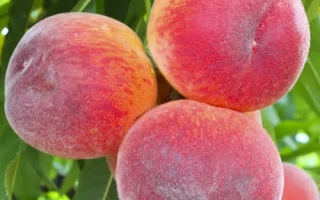

Tree Growth Type
Medium-height
Fruit Weight
120
Fruit Shape
Oval
Fruit Color
Yellow, Red
Your mark
0 votes
0% positive ratings
Store offers · 1 from 1 store
1 offer in 1 store — from 5.73 € per seedling.
Available at: biolocus-plant-pro
Prices are collected automatically from store websites and converted at the current exchange rate. Check the price and availability on the store website before ordering.
Description
The Dikras peach variety is a medium-sized tree with a pyramidal canopy of medium density. It has elongated, long-pointed green leaves with finely serrated edges. The flowers are solitary, bell-shaped, pink, with five rounded petals that touch each other. The tree reaches a height of about 2 meters, and the canopy diameter is approximately 1.5 meters. Blooming occurs in June-July, while fruit ripening happens in mid-July, corresponding to the average ripening period of the variety. Dikras peaches are large, oval-shaped, weighing between 120 to 160 grams. The main fruit color is yellow, with the covering color being dark red with a marble-like pattern; there are no subcutaneous dots on the skin. The skin is of medium coarseness, velvety with slight fuzz. The flesh is yellow, of medium coarseness, juicy and fibrous, possessing a sweet-sour taste that received a tasting score of 4.3 points. The pit is oval-shaped, of medium size, and separates well from the flesh. The average yield of the variety reaches 227.5 centners per hectare. The Dikras variety is characterized by high heat tolerance and drought resistance, as well as low susceptibility to diseases. Fruiting begins in the third year after planting, and about 50 kilograms of yield can be obtained from a single tree. Peaches are rich in vitamins A, E, and C, as well as trace elements and fruit acids, which contribute to strengthening the immune system and improving the condition of skin and hair. Due to the selenium content, this variety also possesses prophylactic properties against cancer. It is recommended to plant seedlings with a closed root system at a depth of about one meter during the spring or autumn period.
Crop & resistance
Crop
Specifications
| Tree Growth Type | |
|---|---|
| Fruit Weight | 120 |
| Fruit Shape | |
| Fruit Color | |
| Flavor of the fruit | |
| Pit | |
| Flesh | |
| Yield (kg/tree) | 50 |
| Tree Height | 2 |
| Drought Tolerance | |
| Fruiting (year after planting) | 3 |
| Features | |
| Registration year | 2014 |
| Catalog | Catalog → Peach |
| Manufacturer | JSC 'CRIMEAN FRUIT COMPANY' |
| Country | Russia |
No reviews yet. Be the first to share your experience.
Alternatives
Peach saplings · similar varieties






See also
Often considered together with this variety


Recently viewed
Products you’ve viewed on this site
Reviews