This variety was obtained at the All-Russian Selection and Technology Institute for Horticulture and Nursery, by H.K. Enikeev and S.N. Satarova, from crossing the varieties 'Bagryannaya' and 'Vladimirskaya'. It was included in the State Register in 2001 for the Central region.
Trees are medium-sized — about 3 m tall, with a spherical, broadly rounded, dense crown. Leaves are of medium size, dark green, matte, with serrated leaf margins. Bears fruit on last year's growth and on flowering spurs.
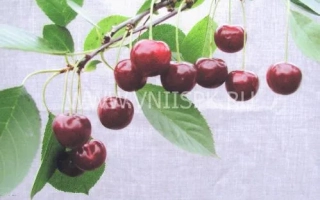
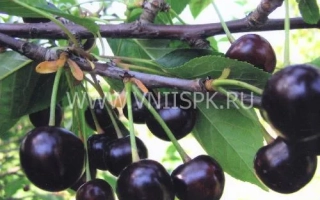
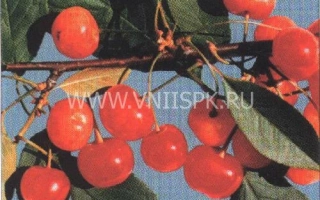
Fruits are of medium size (mass 3.7–4.0 g), flat-round, dark-red, suitable for fresh consumption and processing. Flavor is slightly sour-sweet, dessert-like, with medium-firm, juicy flesh, dark-red juice, medium-sized stone, easily separates from the flesh.
Blooms late — in the third decade of May. High productivity (10–12 kg per tree or 8 t/ha), early-bearing, self-fertile, with annual fruiting. Winter hardiness is above average, flower bud resistance is medium, resistance to spring frosts is relatively high. Resistance to the most dangerous fungal diseases (moniliosis and coccomycosis) is medium.
Advantages of the variety: one of the earliest Moscow varieties with fruits of high flavor and commercial quality.
Disadvantages: medium resistance to fungal diseases.