


SKU #3914
·
496 views
Krasnodar Sweet
Cherry, Sour Cherry
User rating
0 votes0% positive reviews
No ratings yet — be the first.
Type of Sort
Cherry
Store offers · 1 from 1 stores
Prices are updated on loadLoading offers…
Available at: ОПХ им. Тимирязева
Aggregator catalog: prices are collected automatically from store websites, normalized by AI and converted at the current exchange rate. Before ordering, confirm the price and availability on the store's website. This block is not indexed by search engines — the data is loaded after the page opens.
About product

Variety selected at the North Caucasus Regional Institute of Horticulture and Viticulture (Krasnodar). Obtained from interspecific hybridization of the spontaneous cherry hybrid Samsonovka with cherry cultivars (pollen mixture). Breeders: M.A. Kolesnikov, I.M. Kirichek. Approved and recommended for commercial use in the North Caucasus region since 2002. Tree medium-sized, with a flat-oval crown,…
Type of Sort
Cherry
Description
Variety selected at the North Caucasus Regional Institute of Horticulture and Viticulture (Krasnodar). Obtained from interspecific hybridization of the spontaneous cherry hybrid Samsonovka with cherry cultivars (pollen mixture). Breeders: M.A. Kolesnikov, I.M. Kirichek. Approved and recommended for commercial use in the North Caucasus region since 2002.
Tree medium-sized, with a flat-oval crown, slightly drooping, medium density. Shoots are straight, brownish, bare. Leaves are large, broadly egg-shaped, dark green, with a gradually pointed apex and rounded base. Leaf margin is coarsely toothed, surface matte, slightly curved upward like a boat. Petiole medium length, with anthocyanin coloration, small oval glands on it. Flowers are arranged in clusters of 3-4, medium size, with a dish-shaped corolla, white petals, broadly inverted-egg-shaped, loosely arranged, stamens long and short, stigma long, positioned both above and below the anthers, calyx cup-shaped, sepals smooth, with anthocyanin.
Exhibits mixed fruiting type, concentrated on bouquet branches and one-year growths.
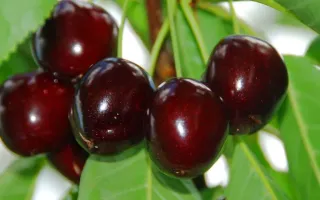
Fruits medium size (4.2-4.6 g), round shape (16 x 18 x 20 mm), with rounded apex and indented base, dark red, with pink flesh and dark pink juice. Flesh medium density, very pleasant dessert flavor (taste evaluation 4.7 points). Stone medium size, round shape. Pedicel thin, medium length, with weak attachment to the fruit. Fruit detachment dry. Fruits contain 17.4% dry matter, 9.4% sugars, 1.5% acids, 11.0 mg% ascorbic acid, 402.4 mg/100g anthocyanin. Variety has universal use, with pleasant fresh fruit flavor, suitable for various processing methods (compotes, jams, juices).
Belongs to very early ripening group and medium flowering group. Begins fruiting at 5 years, partially self-fertile. Among regularly fruiting varieties, with good yield (over 9.0 t/ha). Exhibits medium winter hardiness, drought resistance. Moderately resistant to fungal diseases.
Advantages: high dessert quality of fruits, early ripening.
Disadvantages: partial self-fertility, insufficient resistance to moniliosis.
Crop & resistance
Crop
Specifications
| Type of Sort | |
|---|---|
| Catalog | Catalog → Cherry, Sour Cherry |
Not yet комментариев. Be the first!
Alternatives
Cherry saplings · similar varieties




See also
Often considered together with this variety


Recently viewed
Products you’ve viewed on this site
Reviews · 0