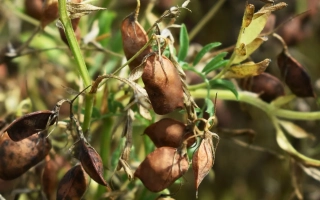
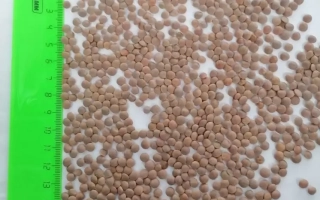
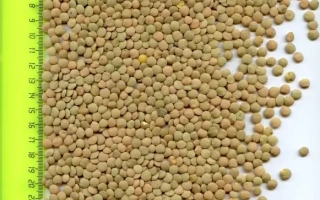
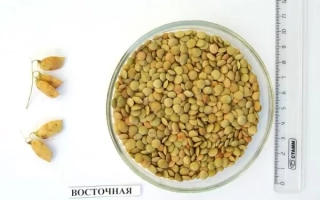
Black Pearl is a type of lentil with small, round, glossy black grains, no more than 3 mm in diameter. Due to this shape and color, it resembles caviar, making it attractive for both culinary experiments and dish presentation.
The variety is distinguished by its high protein content – from 25% to 35% – as well as a rich set of complex carbohydrates, fats, fiber, and vitamins (A, C, E, K, B group). It contains a significant amount of minerals: molybdenum, folic acid, magnesium, zinc, potassium. These properties make black pearl a valuable source of nutrients for both humans and animals.
Black Pearl is a drought-tolerant, nitrogen-fixing crop capable of withstanding brief frosts down to -7 °C. Thanks to these characteristics, it is widely used in crop rotation, improving soil fertility and reducing the need for artificial fertilizers. In the food sector, it is used as a main ingredient in soups, side dishes, and legume dishes; in animal feed production – as a protein source for livestock.
Thus, Black Pearl combines high nutritional value, resistance to adverse climatic conditions, and beneficial properties for agriculture, making it in demand among farmers and food producers.