

SKU #46708
·
64 views
Kara-Dag
Buckwheat
Podilskyi DATUUser rating
0 votes0% positive reviews
No ratings yet — be the first.
Plant Height
80-90 cm
Growing Season
70-80 days
Registration year
1996
Prices in stores
from1.27 €per 1 kg
pack from 12.73 € per 10 kg
1 offer from 1 store
Store offers · 1 from 1 stores
Prices are updated on loadLoading offers…
Available at: Цибулинка
Aggregator catalog: prices are collected automatically from store websites, normalized by AI and converted at the current exchange rate. Before ordering, confirm the price and availability on the store's website. This block is not indexed by search engines — the data is loaded after the page opens.
About product
Kara-Dag — a buckwheat variety developed by individual selection from a mutant population of the Victoria variety, irradiated with gamma rays. This medium-early variety was officially approved in 1996 and is characterized by a vegetation period of 74-75 days, with flowering beginning on day 25-27. Plants reach a height of 80-90 cm, have 8-9 nodes on the stem, and 3-5 branches, of which 3-4 are fir…
Plant Height
80-90 cm
Growing Season
70-80 days
Registration year
1996
Description
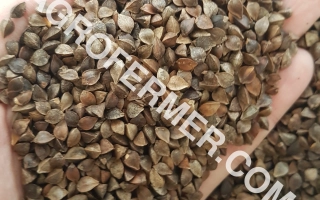
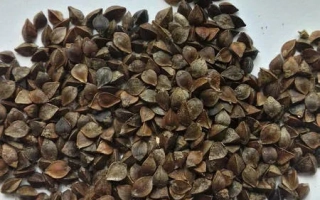
Kara-Dag — a buckwheat variety developed by individual selection from a mutant population of the Victoria variety, irradiated with gamma rays. This medium-early variety was officially approved in 1996 and is characterized by a vegetation period of 74-75 days, with flowering beginning on day 25-27. Plants reach a height of 80-90 cm, have 8-9 nodes on the stem, and 3-5 branches, of which 3-4 are first-order. Flowers are large, white with pale-pink buds, and fruits are large, elongated with distinct median wings and wide edges. The 1000-grain weight ranges from 34.4 to 37.4 g, with a grain yield of 73-75%. Protein content varies from 12.9 to 14.6%, starch — 75%, fat — 2.7%. The grain and porridge have a light-brown color and excellent taste qualities. The maximum yield of this variety reaches 39.1 centners per hectare.
Buckwheat Kara-Dag is a valuable cereal crop with high protein, carbohydrate, and vitamin content, making it in demand for producing porridge, flour, and animal feed. In addition, buckwheat serves as a honey-producing crop, enhancing its economic significance. Thanks to its agronomic properties, this variety is also used as a backup crop for reseeding winter crops that have been lost, contributing to soil fertility conservation and overall agricultural productivity.
Growing the Kara-Dag variety requires adherence to specific agronomic practices aimed at optimizing yield and product quality. Due to its medium-early maturity and adaptability to growing conditions, this variety is suitable for various regions, ensuring a stable and high yield. Its large grains and high porridge yield make Kara-Dag attractive for processing and consumption, as well as for use in food and feed industries.
Buckwheat Kara-Dag is a valuable cereal crop with high protein, carbohydrate, and vitamin content, making it in demand for producing porridge, flour, and animal feed. In addition, buckwheat serves as a honey-producing crop, enhancing its economic significance. Thanks to its agronomic properties, this variety is also used as a backup crop for reseeding winter crops that have been lost, contributing to soil fertility conservation and overall agricultural productivity.
Growing the Kara-Dag variety requires adherence to specific agronomic practices aimed at optimizing yield and product quality. Due to its medium-early maturity and adaptability to growing conditions, this variety is suitable for various regions, ensuring a stable and high yield. Its large grains and high porridge yield make Kara-Dag attractive for processing and consumption, as well as for use in food and feed industries.
Specifications
| Plant Height | 80-90 cm |
|---|---|
| Growing Season | 70-80 days |
| Registration year | 1996 |
| Catalog | Catalog → Buckwheat |
| Manufacturer | Podilskyi DATU |
| Country | Ukraine |
Not yet комментариев. Be the first!
Alternatives
Buckwheat seeds · similar varieties





See also
Often considered together with this variety




Recently viewed
Products you’ve viewed on this site
Reviews · 0