


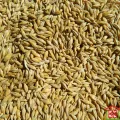


SKU #37778
·
57 views
Kovcheg
Barley
User rating
0 votes0% positive reviews
No ratings yet — be the first.
Winter Hardiness, Ratings (9-1)
8
Plant Type
Winter Barley
Culm; Number of Rows
Six-row
Plant Height
80-90cm
Prices in stores
from10.74 €per 1 kg
pack from 429.63 € per 40 kg
1 offer from 1 store
Store offers · 1 from 1 stores
Prices are updated on loadLoading offers…
Available at: Агрозахист · Агроексперт-Трейд
Aggregator catalog: prices are collected automatically from store websites, normalized by AI and converted at the current exchange rate. Before ordering, confirm the price and availability on the store's website. This block is not indexed by search engines — the data is loaded after the page opens.
About product

Ark is a six-row winter barley early-maturing type, recommended for cultivation in the Steppe and North Caucasus regions, including Crimea. The variety is characterized by good bushiness at late autumn and early spring entries, which contributes to its successful development under dry climatic conditions. Medium height, with plant heights ranging from 86 to 106 cm, Ark has a semi-erect or semi-spr…
Winter Hardiness, Ratings (9-1)
8
Plant Type
Winter Barley
Culm; Number of Rows
Six-row
Plant Height
80-90cm
Description
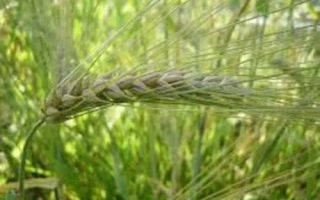
Ark is a six-row winter barley early-maturing type, recommended for cultivation in the Steppe and North Caucasus regions, including Crimea. The variety is characterized by good bushiness at late autumn and early spring entries, which contributes to its successful development under dry climatic conditions. Medium height, with plant heights ranging from 86 to 106 cm, Ark has a semi-erect or semi-spreading plant type, green non-hairy leaves, and lacks anthocyanin coloring on the awns, which are pointed and cover the straw. The ear is cylindrical, six-row, 5–7 cm long, loose, straw-yellow in color, with long (9–12 cm) serrated awns slightly spreading outward. The variety exhibits high winter hardiness, exceeding average levels, as well as lodging resistance rated at 7–8 points. Ark shows good resistance to powdery mildew (6 points) and leaf spot diseases (7–8 points), ensuring stable yields under adverse weather conditions. The 1000-grain weight ranges from 39.6 to 52.0 grams, the grain is elongated-elliptical, medium size, flat, with a uniformity of about 80%. Protein content in the grain ranges from 12.5 to 14.5%, making it valuable for feed purposes. Ark demonstrates high yield potential: maximum yield reaches 85.4 centners per hectare, while the average yield over years of variety trials in the Steppe zone is 63.5 centners per hectare. Sowing rate depends on sowing timing and weather conditions and ranges from 180–250 kg per hectare. Thanks to its agronomic characteristics such as drought tolerance, winter hardiness, and disease resistance, this variety is a reliable choice for farmers aiming to obtain stable and high-quality barley yields under challenging climatic conditions.
Crop & resistance
Crop
Disease resistance
Specifications
| Winter Hardiness, Ratings (9-1) | 8 |
|---|---|
| Plant Type | |
| Culm; Number of Rows | |
| Plant Height | 80-90cm |
| Seed; mass 1.000seeds | 40-42 grams, 48-50 grams |
| Grain; Nitrogenous substances content in dry residue, % | 12 |
| Registration year | 2007 |
| Catalog | Catalog → Barley |
| Legal data |
Show · 1
|
| Country | Ukraine |
Not yet комментариев. Be the first!
Alternatives
Barley seeds · similar varieties




See also
Often considered together with this variety




Recently viewed
Products you’ve viewed on this site
Reviews · 0