
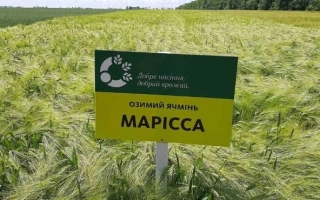


Plant Type
Winter Barley
Ear: Number of Rows
Six-row
Grain: mass 1.000seeds
48-50 grams
Registration year
2023
Your mark
0 votes
0% positive ratings
Store offers · 1 from 1 store
1 offer in 1 store — from 3.87 € per 1 kg.
Available at: Miltor
Prices are collected automatically from store websites and converted at the current exchange rate. Check the price and availability on the store website before ordering.
About product
A high-yielding six-row barley variety of German breeding with a robust phytosanitary immune system.
Description
German breeding for high-yield farming
The six-row winter barley "Melia" is a hallmark product from the German company Zaatzucht Streng-Engelen & KG. Created in the heart of the European agricultural industry, this variety is tailored for professional farmers who prioritize stability under intensive farming conditions. The breeding program at Streng-Engelen is renowned for its rigorous focus on phytosanitary profiles, and "Melia" is a prime example of this dedication.
Phytosanitary resilience
A key advantage of this variety is its comprehensive defense against pathogens that typically threaten winter barley crops. The hybrid exhibits high tolerance to common threats, including:
- Rhynchosporium (leaf scald)
- Powdery mildew
- Brown spot (Helminthosporium)
It is particularly important to highlight the genetically ingrained resistance to net blotch, which allows for a significant reduction in fungicide applications during the growing season. In an era of unpredictable climate conditions, this trait is a decisive factor in maintaining profitability.
Agronomic specifications
As a six-row barley, "Melia" demonstrates excellent tillering capacity. The thousand-grain weight falls within the 48–50 gram range, indicating high grain filling potential and overall yield capacity. A well-developed root system and robust plant morphology ensure endurance during the autumn-spring period, while the carefully selected genetic material allows the crop to utilize nitrogen fertilization with maximum efficiency.
To achieve the standard yield potential, the manufacturer recommends adhering to optimal sowing windows and seeding rates characteristic of intensive winter barley varieties. The use of "Melia" is justified in crop rotations with high-level agronomic management, where the genetic potential of German breeding can be fully realized.
Crop & resistance
Crop
Disease resistance
Specifications
| Plant Type | |
|---|---|
| Ear: Number of Rows | |
| Grain: mass 1.000seeds | 48-50 grams |
| Registration year | 2023 |
| Catalog | Catalog → Barley |
| Manufacturer | Zaatzucht Streng-Engelen GmbH & Co. KG |
| Legal data |
Show · 8
|
| Country | Germany |
No reviews yet. Be the first to share your experience.
Alternatives
Barley seeds · similar varieties




See also
Often considered together with this variety





Recently viewed
Products you’ve viewed on this site
Reviews