


SKU #3312
·
261 views
Cherry
Apple
User rating
0 votes0% positive reviews
No ratings yet — be the first.
Type of Sort
Winter Apple Variety
Store offers · 3 from 3 stores
Prices are updated on loadLoading offers…
Available at: AgronomVIP · GrandSad · Королевский сад
Aggregator catalog: prices are collected automatically from store websites, normalized by AI and converted at the current exchange rate. Before ordering, confirm the price and availability on the store's website. This block is not indexed by search engines — the data is loaded after the page opens.
About product

Winter variety, obtained at the I.V. Michurin Institute of Fruit Growing from crossing of Pekin Shafryany and Antonovka Ordinaria varieties. Breeders G.A. Lobanov, Z.I. Ivanova, V.K. Zaets, S.I. Isaev. Approved for the Central Black Earth region. Widely grown in Tambov and Voronezh regions.
Medium-sized tree, round or flat-round, dense crown; branches in the crown diverge from the trunk at n…
Type of Sort
Winter Apple Variety
Description
Winter variety, obtained at the I.V. Michurin Institute of Fruit Growing from crossing of Pekin Shafryany and Antonovka Ordinaria varieties. Breeders G.A. Lobanov, Z.I. Ivanova, V.K. Zaets, S.I. Isaev.
Approved for the Central Black Earth region. Widely grown in Tambov and Voronezh regions.
Medium-sized tree, round or flat-round, dense crown; branches in the crown diverge from the trunk at nearly straight angles, arranged compactly. Dominant fruiting type: spear-shaped, short and long fruiting spurs. Bark on the trunk and main branches is reddish, on shoots — cherry-colored.
Shoots are straight, thin, internodes slightly shortened. Many small buds. Leaves medium-sized, egg-shaped, smooth; blade flat, moderately hairy. Margins finely toothed and scalloped. Petiole medium length, diverges from the shoot at an acute angle, colored at the base, thick or medium, hairy. Stipules small or absent. Flower buds medium-sized.
Flowers medium-sized, white or cream-colored, fragrant; petals egg-shaped. Flowering period — second decade of May. Style medium, stigmas level with anthers.
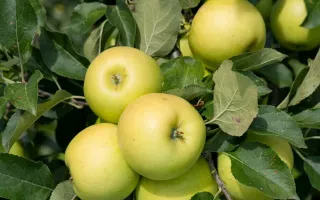
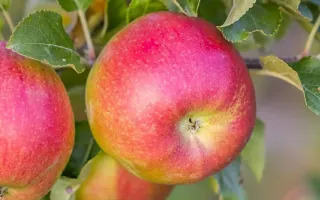
Fruits have regular shape, one-dimensional, round or round-conical. Average fruit weight — 115 g, maximum — 136 g. Skin is tender, waxy. Color at harvest: base — greenish-yellow, covering mostly the fruit surface as bright pink blush, and in warm sunny years during ripening — bright cherry-red. Skin pores medium-sized, clearly visible and numerous. External appearance attractiveness — 4.5 points. Fruit stalk short and thick. Calyx cup medium depth and width, smooth, olive-colored, no rust. Calyx closed, non-deciduous. Receptacle small. Heart-shaped, onion-like, chambers semi-open, large. Sub-calyx tube medium length and width. Seeds medium-sized, dark-brown or dark-cherry-colored, slightly larger, dark burgundy.
Flesh is white, tender, finely textured, juicy, slightly acidic-sweet, with mild aroma, very good taste, tasting score 4.3–4.5 points. Contains: sugars — 10.31%, titratable acids — 0.51%.
Harvesting period — beginning of September.
Fruits have high commercial and consumer qualities — large, one-dimensional fruits with attractive appearance and excellent taste. Consumer period begins 10–15 days after harvest and ends in mid-February. Transportability is good.
Fruits are intended for fresh consumption and for canning.
Winter hardiness is medium. In normal winters, the wood of one-year growths slightly freezes; in severe winters of 1978–79, average freezing was 1.3 points. Spring frost resistance of flowers is medium. Resistance to fungal diseases and drought — medium.
Advantages of the variety: high yield and large, colored, regular-shaped fruits, dessert flavor, winter consumption period.
Disadvantages of the variety: fruit consumption period ends in February, medium winter hardiness of vegetative parts.
Video · 8 videos
Suggest a video →Crop & resistance
Crop
Specifications
| Type of Sort | |
|---|---|
| Catalog | Catalog → Apple |
Not yet комментариев. Be the first!
Alternatives
Apple saplings · similar varieties




See also
Often considered together with this variety




Recently viewed
Products you’ve viewed on this site
Reviews · 0