
Disease
Especially harmful
Potato stem and leaf rot
Potato stem and leaf rot
Description
Symptoms
The first clinical signs of stem and leaf rot typically appear during the mid-to-late stage of potato development, often after row closure.
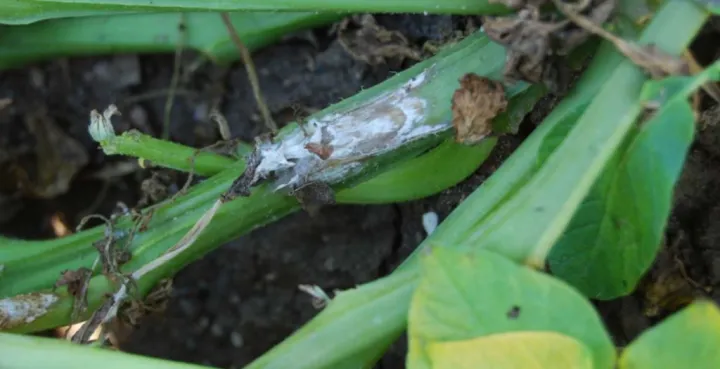
Lesions usually start as dark, water-soaked spots on stems, which eventually expand and bleach to a pale, necrotic color.
A diagnostic characteristic is the development of a white, fluffy, cotton-like mycelium covering the surface of the infected stems during humid weather.
Inside the hollowed-out stems, the fungus produces large, black sclerotia that remain in the plant debris or fall into the soil after the plant dies.
As the infection progresses, the foliage wilts rapidly, turns yellow or brown, and eventually collapses, leading to premature plant death.
Pathogen
The causative agent of this disease is the fungus Sclerotinia sclerotiorum, a highly destructive plant pathogen with an exceptionally wide host range.
The fungus persists in the soil primarily as sclerotia, which are hard, black, irregular resting structures capable of surviving in the field for several years.
In moist conditions, these sclerotia germinate to produce apothecia—small, cup-shaped fruiting bodies that release airborne ascospores into the canopy.
The pathogen can also spread via mycelial growth from plant to plant through direct contact between infected and healthy tissue.
Once inside the host, the fungus secretes enzymes and oxalic acid, which aggressively degrade plant cell walls and facilitate the colonization of the potato stem.
Conditions for development
The development of white mold is strongly favored by cool, wet weather and prolonged periods of high relative humidity or heavy dew.
Dense, lush potato canopies create a microclimate with low light and poor air circulation, which prevents the foliage from drying and accelerates fungal growth.
Excessive nitrogen fertilization often results in overly vigorous vegetative growth, making the plants more susceptible to initial infection and rapid disease spread.
Poorly drained fields or low-lying areas that retain moisture provide the exact environmental triggers needed for sclerotia to germinate.
The disease thrives when temperatures remain in the moderate range, typically between 15°C and 25°C, combined with consistent soil moisture.
Why it matters
Potato stem and leaf rot causes significant yield losses by killing plants before they reach full maturity, thereby truncating the tuber bulking period.
The destruction of vascular tissue restricts the translocation of essential sugars and nutrients, resulting in smaller, stunted tubers that may also have a shorter shelf life.
An infected field becomes heavily infested with sclerotia, significantly increasing the inoculum pressure for future seasons and limiting crop rotation options.
In addition to direct losses, the disease weakens the stems, making them prone to mechanical damage and secondary invasion by opportunistic bacteria.
The cumulative economic impact includes lower production volume, potential rejection of produce due to quality issues, and the high cost of disease prevention measures.
Protection
Effective crop rotation is the most critical management tool; it is recommended to avoid planting potatoes in fields with a history of white mold for at least 3-4 years.
Selecting non-host crops for rotation, such as cereals or grasses, helps to reduce the concentration of sclerotia in the soil profile over time.
Optimal plant spacing and balanced nutrient management are essential to ensure a robust canopy that allows for adequate airflow and reduced humidity.
Sanitation practices, such as the removal of infected crop debris, can help lower the initial inoculum level, although this is often difficult in large-scale operations.
Fungicide applications, timed strategically during the early flowering phase of the potato, can provide protection against spore germination and stem infection.
Content graph
Connections · Potato stem and leaf rot
Most often together:
Marketplace
Products · 8



Community
Discussion
No discussions yet — be the first.