

Description
Symptoms
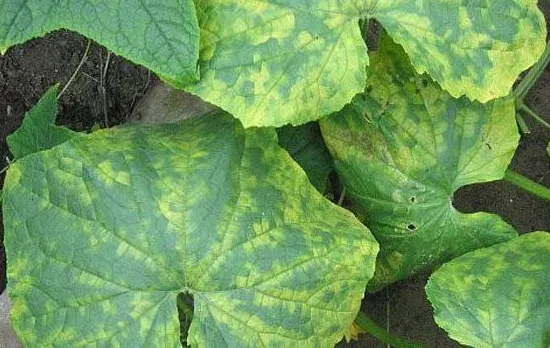
The most distinctive symptoms are mosaic patterns on foliage, characterized by alternating dark and light green patches. Leaves often become stunted, distorted, and develop a crinkled or puckered surface.
Systemic infection leads to significant stunting of the plant. Internodes become shortened, and the overall plant architecture appears compressed and shrubby, especially in cucumber and pepper plants.
Fruit symptoms include mottling, yellow streaks, and severe deformation. Infected fruits may become bumpy, smaller than normal, and lose their marketability due to irregular pigmentation.
In tomatoes, CMV infection often manifests as filiform (shoestring) leaf symptoms, where the leaf blades are reduced to narrow, thread-like structures, severely impairing photosynthesis and plant vigor.
- Mottled, chlorotic foliage.
- Reduced flower production and poor fruit set.
- Stunted root systems.
- Rapid wilting under heat stress.
Pathogen
The causative agent is the Cucumber mosaic virus (CMV), one of the most widespread and destructive plant viruses in the world, affecting a vast array of ornamental, vegetable, and fruit crops.
CMV belongs to the Cucumovirus genus within the Bromoviridae family. The virus particles are isometric and carry a tripartite, single-stranded positive-sense RNA genome, which facilitates rapid viral replication.
The virus is primarily transmitted by aphids, including the green peach aphid (Myzus persicae) and the melon aphid (Aphis gossypii). Transmission is non-persistent, meaning aphids can acquire and transmit the virus in just a few seconds of probing.
In addition to insect vectors, CMV spreads mechanically through contact with infected sap. Handling plants during pruning, staking, or harvesting with contaminated tools or hands is a common pathway for local spread within fields.
The virus survives in a wide range of reservoir hosts, particularly perennial weeds and contaminated seeds, which serve as the primary inoculum source at the beginning of each growing season.
Conditions for development
CMV thrives in temperate climates, with optimal viral replication occurring at temperatures between 20°C and 25°C. Warm spring weather often coincides with the peak of aphid migration, facilitating early-season infections.
The disease incidence is strongly correlated with aphid population dynamics. Dry, warm conditions promote aphid reproduction, leading to increased movement and higher rates of virus transmission across the field.
Reservoir hosts are critical to disease development. Fields adjacent to weedy areas or areas with a history of perennial weeds are at a much higher risk of early-season colonization by the virus.
High planting densities in greenhouses or fields increase the frequency of leaf-to-leaf contact, which accelerates the spread of the virus through mechanical wounding in the absence of insect vectors.
Poor sanitation practices in nursery settings can lead to the widespread distribution of CMV-infected seedlings, ensuring the disease is already present in the field at the time of transplanting.
Why it matters
CMV is responsible for severe economic losses in agriculture, often leading to yield reductions of up to 80-90% in highly susceptible cultivars, rendering the crop non-viable.
Beyond quantity, the quality of produce is severely compromised. Deformed, discolored fruits are typically rejected by markets, and the nutritional value and storage life of the harvest are greatly reduced.
Infected plants serve as a source of inoculum for the rest of the season. As the virus weakens the host, the plants become increasingly susceptible to secondary infections by bacteria and fungi, causing premature death.
Early-stage infection at the seedling stage often results in complete loss of the plant. Because there is no chemical cure for viral infections in crops, management must be focused entirely on prevention.
The extensive host range of CMV makes it a persistent threat that can move between various crops, such as moving from weeds to cucumbers, and then to nearby tomato or pepper plantings.
Protection
Effective management begins with rigorous weed control. Eliminating perennial weeds in and around fields removes the virus reservoir that allows the pathogen to persist through the winter.
Controlling aphid populations using systemic insecticides or reflective mulches can significantly reduce the incidence of infection by discouraging insect probing and feeding on the crops.
The use of resistant or tolerant cultivars is the most effective long-term strategy for CMV control. Many modern vegetable hybrids are specifically bred for resistance to CMV strains.
Implementing strict sanitation protocols is essential. This includes sanitizing tools with 10% bleach or alcohol between rows and removing symptomatic plants immediately upon detection to break the transmission cycle.
In greenhouse production, using insect-proof netting over vents and doors is highly recommended to block the entry of aphids and other vectors, protecting the crop from primary infection.
Content graph
Connections · Cucumber mosaic virus
Most often together:
Marketplace
Products · 21






Community
Discussion
No discussions yet — be the first.