
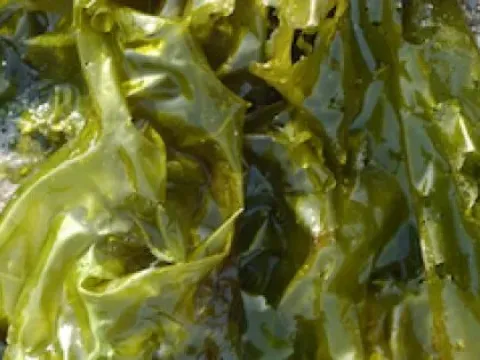
Umbraulva
Umbraulva
Umbraulva is a marine green macroalga of the Ulvaceae family that is propagated through the settlement of zoospores onto suitable substrates. Unlike terrestrial crops, there is no seed sowing, but rather an inoculation process using specialized netting or artificial structures.
What the section contains

Umbraulva
The optimal timing for inoculation is determined by water temperature, light availability, and nutrient peaks. Early spring and autumn cycles are generally the most productive periods, coinciding with natural spore release and rapid growth phases.
In industrial aquaculture, hatchery systems are used to prepare the substrate, ensuring high initial density of the algae. This controlled start prevents colonization by undesirable species and ensures a uniform yield across the entire cultivation area.
Strategic placement of the cultivation rafts is essential. Sites are selected based on tidal flow patterns, which ensure a continuous supply of essential minerals and gases, while simultaneously removing metabolic waste products from the immediate vicinity of the algae.
Continuous monitoring of the substrate status allows producers to adjust the placement of ropes or nets. This agility in management is key to maintaining a high-quality culture throughout the entire growing season.
Umbraulva thrives in high-quality marine environments with specific salinity levels ranging from 25 to 35 ppt. Consistent water quality is paramount, as the species is highly sensitive to sudden changes in chemical composition or pollutants.
The ideal temperature range for metabolic activity is 15–22°C. Excessive temperatures above 28°C can cause rapid cellular degradation and bleaching of the thallus, potentially ruining an entire crop cycle if not managed through site depth adjustment.
Photosynthetic efficiency is heavily dependent on light intensity and water clarity. Farmers must ensure that the cultivation depth allows for sufficient photon flux density while avoiding UV-induced damage during peak solar exposure hours.
Nutrient availability, particularly nitrogen and phosphorus, is the primary driver of growth rates. In areas with low nutrient concentrations, artificial enrichment or integrated multi-trophic aquaculture (IMTA) systems are often employed to boost yields.
Adequate water circulation is necessary to prevent the accumulation of oxygen at night and the depletion of inorganic carbon during the day. Proper spacing of the culture units ensures that each plant has access to the necessary resources for development.
Yields of Umbraulva are quite substantial when optimal growth conditions are maintained. Given its fast growth rate, the culture can support multiple harvest cycles within a single year, significantly increasing the annual productivity of an aquaculture farm.
Production levels are estimated by sampling the biomass density on the collection nets. These regular assessments are crucial for logistics planning, particularly for subsequent drying or processing operations on land.
Maximum yield is achieved when harvesting is timed precisely with the late vegetative phase. Harvesting too early results in missed growth potential, while harvesting too late may lead to senescence and the detachment of the algae from the substrate.
Post-harvest management involves separating high-quality fronds from smaller, less-developed material. This classification ensures that the end product meets the required industry standards for food-grade or industrial usage.
Data indicates that productivity per hectare can increase with the continuous improvement of farming techniques. Optimizing water flow and nutrient uptake has proven to be the most effective way to enhance total biomass production.
The primary threat to cultivation is competition from epiphytic algae and microalgae, which can quickly overgrow the Umbraulva thalli, blocking light and nutrient access. Regular manual or mechanical cleaning of the substrates is vital.
Grazing organisms, such as small crustaceans, amphipods, and certain gastropods, can cause significant damage to the tissue. Implementing protective netting or biological control agents helps mitigate these losses effectively.
Pathogenic outbreaks, often fungal or bacterial in nature, can occur in overcrowded plantations or under poor water exchange conditions. Maintaining optimal density is the most effective preventative measure against widespread infection.
Chemical contamination is a severe concern, as marine algae bioaccumulate heavy metals and synthetic toxins from the water column. Continuous water quality testing is a non-negotiable step in the production of safe, marketable product.
- Regular site monitoring for invasive epiphytes.
- Implementation of pest control barriers.
- Water quality testing for trace metal contamination.
- Density management to improve water circulation.
Harvesting is performed using mechanical cutters or by retrieving the entire substrate units from the water. Careful handling during this process is essential to maintain the structural integrity of the seaweed fronds.
After retrieval, the raw seaweed is rinsed in clean seawater to remove sand, debris, and silt. High-pressure washing systems are standard in modern facilities to ensure the product is free of contaminants.
Dewatering is the next step to prevent rapid microbial decay. Centrifugal systems are commonly used to remove excess surface water without causing mechanical stress to the algal tissue, which could lead to quality degradation.
Drying must be conducted in controlled conditions, preferably at temperatures not exceeding 40°C. This gentle drying process preserves the chemical composition, color, and nutritional profile of the seaweed for the end consumer.
Final packaging requires air-tight, moisture-proof containers to protect the dried product from environmental humidity. Properly stored Umbraulva remains shelf-stable for over a year, maintaining its high-quality characteristics.