
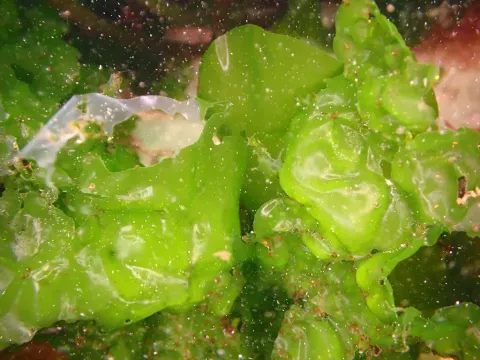
Ulva
Ulva Linnaeus
Ulva, commonly known as sea lettuce, belongs to the Ulvaceae family and is highly valued in the aquaculture industry. The cultivation process starts with the seeding phase, where zoospores are attached to specific substrates such as synthetic nets or ropes submerged in seawater.
What the section contains


Ulva
The sowing process is typically initiated in early spring when water temperatures begin to rise, triggering rapid cell division. Controlled aquaculture systems or sheltered coastal areas are selected to ensure that the seeded materials remain secure and exposed to optimal sunlight.
Seedstock can be sourced from wild populations or laboratory-grown cultures. Once the spores germinate and anchor to the substrate, they grow rapidly into broad, thin thalli, forming the characteristic sheet-like structure that gives the organism its popular name.
Plant density is a critical factor in successful cultivation. Overcrowding inhibits light penetration and restricts nutrient flow to the inner layers of the algae, which can significantly reduce the quality and overall growth rate of the harvest.
Site selection for farming involves rigorous testing of water current velocity and nutrient availability. A steady water exchange is necessary to replenish the local nutrient pool and remove metabolic wastes that could otherwise stunt the development of the algae.
Ulva thrives in environments rich in dissolved inorganic nitrogen and phosphorus. Because of this, it is frequently used as a biological filter in integrated multi-trophic aquaculture systems to reduce nutrient loading in the water column.
The ideal temperature range for vegetative growth is between 10 and 22 degrees Celsius. Extreme temperatures outside this range can trigger stress responses, such as bleaching or cellular decay, which jeopardize the entire production cycle.
Salinity levels for optimal development should remain within the 20–35 ppt range. While Ulva is known for its tolerance to fluctuating salinity, stable conditions are always preferred to ensure consistent production and biochemical quality.
High water clarity is vital as light is the primary energy source for photosynthesis. Sedimentation or turbidity caused by storms or human activity can smother the blades, causing oxygen deprivation and rapid degradation of the thalli.
The area must be free of heavy metals and pollutants, as Ulva acts as an efficient bio-accumulator. Monitoring water quality is essential to guarantee that the final product meets safety standards for food, feed, or medical use.
The rapid growth rate of Ulva makes it one of the most productive species in marine farming. Under favorable conditions, the biomass can double in size within a matter of days, allowing for a short harvest cycle of 4 to 6 weeks.
Techniques such as partial harvesting, where only a portion of the thallus is removed, stimulate the remaining cells to regrow vigorously. This method effectively increases the cumulative biomass yield over a single growing season.
Controlled pond systems offer the highest yield potential by allowing operators to regulate carbon dioxide, aeration, and nutrient levels. This industrial approach minimizes the impact of environmental fluctuations and provides a reliable harvest schedule.
Yield management requires careful tracking of biomass density. Producers must balance the desire for high production with the need to prevent disease outbreaks, which often occur when crops become too dense and lack proper aeration.
Seasonal peaks in sunlight and nutrient upwelling determine the maximum potential yield. Experienced growers use data on local oceanographic conditions to optimize the timing of seed immersion and harvest cycles to maximize productivity.
Small crustaceans, such as amphipods, represent the most common pests of Ulva crops. These organisms feed on the tender tissues, leaving holes and damaged structures that are highly susceptible to secondary bacterial infections.
Bacterial diseases often manifest as necrotic patches or slime, typically associated with poor water circulation. In stagnant water, organic waste accumulates, creating an ideal environment for pathogenic bacteria to thrive and spread throughout the crop.
Competition from epiphytic algae and invasive macroalgae can severely limit the growth of Ulva. These unwanted organisms compete for space and nutrients, necessitating regular cleaning or maintenance of the cultivation nets.
Environmental shocks, such as heavy rain leading to sudden freshwater influx, cause severe osmotic stress. This can lead to massive cell rupture, causing the algae to lose structural integrity and start decaying within a few hours.
Effective management includes preventative cleaning, monitoring of water quality, and the strategic positioning of farms in areas with adequate flushing to prevent the buildup of pathogens and waste products.
Harvesting is typically performed by cutting the thalli, which allows the base to remain attached for regeneration. Manual labor or specialized mechanical harvesting equipment is used depending on the scale of the aquaculture operation.
Once harvested, the biomass must be processed immediately to prevent rapid spoilage. Due to the high moisture content of fresh Ulva, it can degrade quickly under warm conditions if not transported or treated properly.
The cleaning phase involves removing debris, sand, and small marine organisms trapped within the leafy structures. This ensures that the raw material is clean and suitable for high-end market applications.
Drying is the most common preservation method. Using industrial dryers with controlled heat ensures that the nutritional properties, including vitamins and proteins, are preserved while moisture is reduced to prevent bacterial growth.
Final storage requires moisture-proof packaging, as dried Ulva is highly hygroscopic. Properly sealed products can be stored for long periods, making it convenient for international trade and distribution to various industries.