
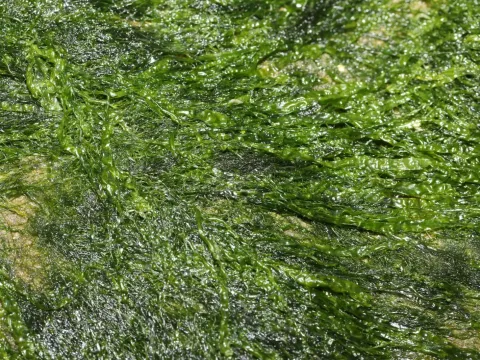
Enteromorpha
Enteromorpha
Enteromorpha is a genus of green algae belonging to the Ulvaceae family. It is widely recognized for its tubular, hollow thallus structure, which allows it to thrive in diverse marine environments, including tidal pools and estuaries.
What the section contains

Enteromorpha
The biological success of Enteromorpha is attributed to its rapid nutrient uptake and high photosynthetic efficiency. Its simple cellular structure allows for direct absorption of dissolved nutrients from the surrounding water column.
Successful cultivation requires optimized water conditions, specifically regarding nutrient concentrations. High levels of nitrogen and phosphorus are essential for achieving maximum biomass production in commercial aquaculture systems.
Environmental parameters such as temperature and salinity must be closely monitored to prevent stress. Enteromorpha performs best in temperate conditions, though it remains resilient across a wide spectrum of salinity levels, facilitating farming in brackish waters.
The cultivation process involves the use of artificial substrates, such as nylon nets or rope systems, where the algae are allowed to attach and grow. This method ensures adequate water circulation, which is vital for the health and vitality of the crops.
Enteromorpha is highly valued for its exceptional growth rates. In controlled environments with constant nutrient supply, this seaweed can produce massive amounts of harvestable biomass within a short vegetative cycle, surpassing many land-based crops.
The primary threats include epiphytic outbreaks and overgrazing by marine invertebrates. Furthermore, rapid fluctuations in water chemistry or temperature can lead to thallus degradation, significantly impacting the yield stability of the farm.
Harvesting is typically scheduled when the algae reach maximum density. Mechanical rakes or specialized net systems are employed to remove the biomass, which is then dried and processed into feed, fertilizers, or industrial extracts.