
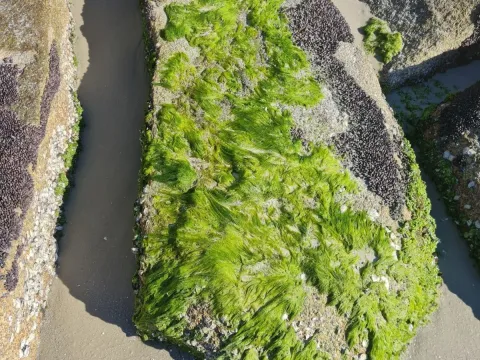
Enteromorpha flexuosa
Enteromorpha flexuosa
Enteromorpha flexuosa is a prominent species of green macroalgae within the Ulvaceae family, widely recognized for its rapid growth in various aquatic environments.
What the section contains
Enteromorpha flexuosa
The life cycle involves an alternation of generations, where sporophyte release is highly sensitive to environmental triggers such as light intensity and water temperature.
In farming practices, the sowing process is achieved by deploying various artificial substrates, including ropes, nets, and plastic grids, into the marine environment.
These substrates are positioned during the peak sporulation period to ensure maximum colonization density by the algal zoospores floating in the water column.
Proper timing is essential, as the initial attachment phase determines the long-term yield and uniform distribution of the algal biomass on the farming structure.
This species thrives in areas with high nutrient availability, particularly nitrates and phosphates, which act as primary stimulants for rapid vegetative growth.
Enteromorpha flexuosa displays impressive euryhaline capabilities, allowing it to colonize environments ranging from fully marine to brackish estuarine waters.
Light availability is a critical factor for photosynthesis; therefore, the cultivation depth should be limited to the euphotic zone to prevent growth stagnation.
Temperature fluctuations are generally tolerated, though optimal growth is observed between 15 and 22 degrees Celsius in nutrient-rich coastal bays.
Consistent water movement is required to facilitate nutrient uptake and gas exchange, ensuring the vitality of the filaments throughout the growing cycle.
The yield of Enteromorpha flexuosa is highly favorable due to its exponential growth rate, often allowing for multiple harvests within a single growing season.
By optimizing substrate spacing and maintaining favorable water quality, farmers can achieve high biomass outputs that are economically viable for industrial use.
In controlled aquaculture environments, biomass production can be enhanced by periodic nutrient enrichment of the surrounding water during low-nutrient intervals.
The harvested biomass serves as a valuable resource in the production of organic fertilizers, livestock feed additives, and raw materials for the hydrocolloid industry.
Effective management of the crop density helps prevent overcrowding, which otherwise leads to stunted growth and reduced overall quality of the harvested product.
The most significant threat to production is the colonization of the crop by epiphytic species, which effectively compete for sunlight and essential nutrients.
Grazing pressure from herbivorous crustaceans and small gastropods can lead to significant damage to the delicate filaments, resulting in substantial yield losses.
Fungal and bacterial diseases, often exacerbated by stagnant water or excessively high temperatures, can cause mass decay and degradation of the algae beds.
Pollution from heavy metals and chemical runoff remains a major concern, as the species acts as a bioaccumulator, making it unsuitable for certain applications if contaminated.
Environmental stress, such as extreme salinity shifts or sudden hypoxic events, can trigger premature bleaching and death of the algal colonies.
Harvesting is typically performed during the vegetative peak, ensuring that the biomass has reached its maximum nutritional value before the reproductive stage.
Mechanical harvesting techniques utilize specialized equipment to lift the substrate frames, allowing for a swift and efficient collection of the algal material.
Post-harvest procedures include thorough cleaning to remove sand, silt, and epiphytic organisms, which is crucial for meeting commercial quality standards.
The harvested material is then subjected to controlled dehydration in solar or thermal dryers to reduce moisture content and stabilize the product for storage.
Properly dried Enteromorpha flexuosa retains its chemical integrity, making it a stable and high-demand product in the global sustainable agriculture market.