
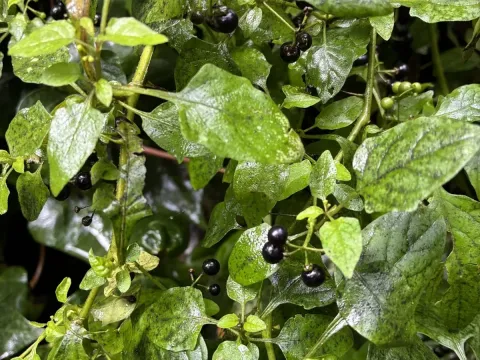
Solanum photeinocarpum
Solanum photeinocarpum
Solanum photeinocarpum is an annual herbaceous crop belonging to the Solanaceae family. Sowing is typically performed in early spring once the soil temperature is consistently above 15°C.
What the section contains
Solanum photeinocarpum
Starting plants indoors using seedling trays is a recommended practice to ensure a stronger start, usually beginning 6 to 8 weeks before the last expected frost date.
Seeds are sown in a nutrient-rich, light growing medium. Proper moisture and warmth are essential during the germination phase to ensure a uniform emergence of seedlings across the tray.
Direct field sowing is possible in warmer climates, provided that the soil is prepared thoroughly with organic matter to support the initial growth stages of the plant.
Once seedlings reach a height of 10-15 cm, they are ready for transplanting into the main field, ensuring enough space between plants to allow for healthy development and airflow.
The plant thrives in sunny environments with full exposure to daylight, which is critical for the development of the fruit and the accumulation of secondary metabolites.
Well-draining, fertile soil with a slightly acidic to neutral pH is ideal for the cultivation of this species to prevent nutrient deficiencies during the rapid growth phase.
Consistent moisture is necessary, particularly during the flowering and fruit-setting stages; however, waterlogging must be avoided to keep the root system healthy and productive.
Regular fertilization with balanced NPK formulas helps maximize the yield, while organic compost application contributes to long-term soil health and moisture retention.
Temperature control is essential; the plant performs best in a range between 20°C and 28°C. Extreme heat may require shading, while cold protection is needed during autumn.
The yield of Solanum photeinocarpum is highly dependent on climate conditions and effective management of fertilization throughout the vegetative and reproductive periods.
As a medicinal and horticultural crop, it is valued for its berry production, which requires balanced watering to ensure the berries reach their optimal weight and size.
Productivity increases significantly when plants are pruned to remove unnecessary lateral shoots, allowing the plant to direct its energy towards fruit formation rather than biomass.
Harvest cycles are consistent under optimal conditions, providing a steady supply of berries over a prolonged season, which is advantageous for commercial cultivation.
Yield estimation depends on plant density per hectare and local environmental variables, but with standard care, high quality harvests are achievable across various regions.
Common threats include fungal diseases like blight and various root pathogens, which are more prevalent in high-humidity conditions and poor drainage scenarios.
Insect pests, specifically aphids and beetles that target the Solanaceae family, can cause significant foliage damage if not managed with timely biological or chemical controls.
Integrated pest management, including crop rotation and the use of resistant varieties, is strongly advised to prevent soil-borne pathogens from building up over consecutive years.
- Early and late blight
- Colorado potato beetle
- Aphid infestations
- Root rot pathogens
- Viral mosaic diseases
Regular monitoring of the lower leaf surfaces and maintaining clean field borders helps in reducing the population of pests and the spread of viral infections.
Harvesting is performed manually as berries reach their deep, dark maturity stage. This process is usually repeated every few days to ensure the best possible quality.
Handling the berries with care is important to prevent bruising, as the skin is delicate and prone to rapid degradation if damaged during the picking process.
Post-harvest processing often involves drying the fruits in controlled environments to preserve the active ingredients required for pharmaceutical or culinary applications.
Storage should be conducted in cool, dry places to extend the shelf life of the berries, as they do not maintain quality for long if left in high-temperature environments.
For large-scale operations, sorting the berries by size and quality is essential before shipping or final processing to maintain the standards required by the target market.