
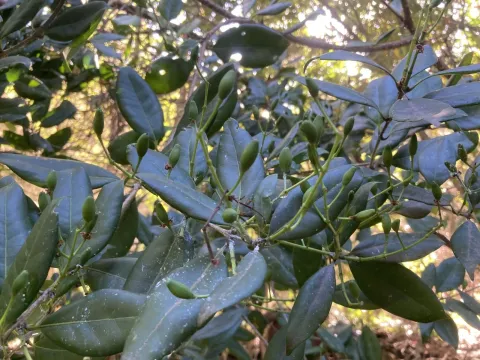
Notelaea excelsa
Notelaea excelsa
Notelaea excelsa is a distinguished evergreen tree belonging to the Oleaceae family. It is recognized for its dense, glossy foliage and its role in the ecosystem of its native habitats.
What the section contains
Notelaea excelsa
The plant is native to the Canary Islands and the Cape Verde Islands, thriving in subtropical microclimates. It is typically found in humid forests that provide stable temperatures and sufficient atmospheric moisture.
To cultivate this species, it is essential to mimic its natural environment. Soil should be rich in organic matter and possess an excellent drainage capacity to prevent waterlogging, which the plant does not tolerate.
Notelaea excelsa prefers semi-shaded positions, especially in its juvenile stages. Exposure to harsh, direct sunlight can lead to leaf burn and reduced growth vigor in young specimens.
Maintaining a consistent irrigation schedule is vital. During the growing season, the substrate should remain moist but never waterlogged, requiring careful management of water volumes depending on the season.
The main threats to Notelaea excelsa involve pathogenic fungi, particularly in environments with high humidity and poor airflow. These fungi can compromise the structural integrity of the plant.
Insects like scale insects and aphids often target the younger, more succulent parts of the tree, sucking sap and weakening the overall vitality of the organism.
Root rot, often caused by Phytophthora species, remains the most significant threat to plants grown in containers or areas with inadequate soil drainage.
Viral infections can occur, often transmitted by insect vectors. Implementing strict quarantine measures for new stock helps minimize the spread of such diseases within nursery populations.
Effective management includes regular monitoring for early signs of distress, such as leaf discoloration or wilting, and applying targeted organic treatments whenever possible.