
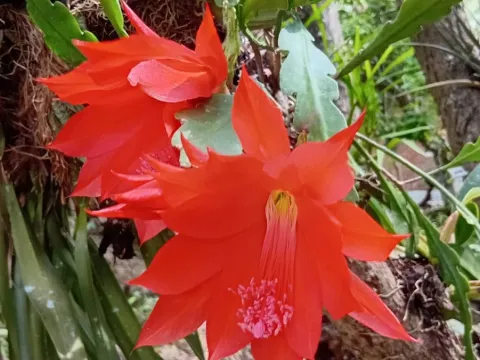
Nopalxochia
Nopalxochia
Nopalxochia is a genus within the Cactaceae family, known for its distinct epiphytic growth habit. Originating from the humid forests of Mexico, these plants naturally thrive on trees and rocky cliffs, adapting to environments with filtered light and high atmospheric moisture levels.
What the section contains
Nopalxochia
To cultivate Nopalxochia successfully, one must maintain temperatures between 18°C and 25°C. The plants are sensitive to direct, intense sunlight, which can cause leaf scorch. Ideally, they should be placed in bright, indirect light, mimicking the forest canopy environment.
The substrate must prioritize drainage and aeration. A mix consisting of orchid bark, peat, perlite, and a small amount of charcoal is highly effective. This allows water to drain rapidly while maintaining enough moisture for the roots without risking waterlogging and decay.
Watering requirements involve keeping the soil consistently moist but never soggy. During the active growing season, regular watering is essential. In winter, watering frequency should be reduced, yet the plant should never be allowed to dry out completely, as it lacks the water-storage capacity of desert cacti.
The primary use of Nopalxochia is ornamental. With its beautiful, colorful flowers and attractive arching stems, it is a prized specimen for indoor collectors and tropical-style greenhouse displays. It performs exceptionally well in hanging baskets, which showcase its trailing growth habit.
Common pests include mealybugs and spider mites, which can be particularly damaging in indoor conditions with low air circulation. Physical removal or the application of insecticidal soaps and oils is recommended at the first signs of infestation to prevent rapid spreading across the succulent stems.
Fungal issues, especially root rot, occur when moisture levels are not carefully managed. If the growing medium remains saturated for extended periods, the root system begins to deteriorate. Preventive measures include using high-quality porous pots and ensuring the substrate allows for rapid water drainage.