
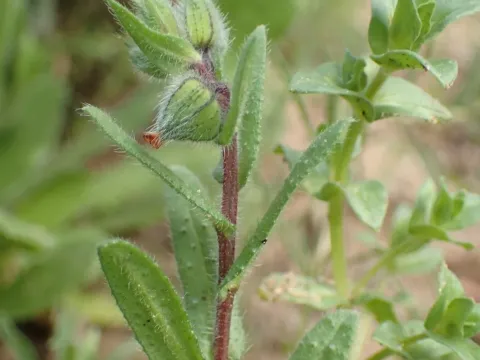
Nonea ventricosa
Nonea ventricosa
Nonea ventricosa is an annual plant belonging to the Boraginaceae family. Successful cultivation begins with precise timing, usually in early spring once the soil temperature consistently reaches 8–10 degrees Celsius.
What the section contains
Nonea ventricosa
The optimal planting pattern involves row sowing with a spacing of 30–45 cm. This configuration ensures that every plant has sufficient space, sunlight, and air circulation, which is crucial for early developmental stages.
Seeds should be planted at a depth of 2–3 cm. Planting too deeply can lead to delayed emergence and uneven crop stands, as the energy reserves of the seeds are exhausted before they reach the surface.
A well-prepared, fine-textured seedbed is vital to ensure good contact between the seed and the soil, facilitating efficient moisture absorption and uniform germination across the entire field.
In regions with mild winters, autumn sowing may be explored to take advantage of soil moisture reserves, leading to faster establishment in the subsequent spring season.
This crop thrives in open, sunny locations. Nonea ventricosa is noted for its high drought tolerance, a trait inherited from its origins in the arid and semi-arid zones of the Mediterranean and Western Asia.
It prefers light sandy or loamy soils with excellent aeration and drainage. Soil waterlogging is highly detrimental to the plant, often leading to rapid root decay and plant mortality.
The ideal soil pH range for this crop is slightly alkaline to neutral. The presence of carbonates in the soil profile generally favors the healthy growth and development of the plant biomass.
A moderate temperature regime is preferred during the growing season. While established plants are resilient, frost protection may be required during the early stages of development to prevent crop loss.
Balanced fertilization, particularly with an emphasis on phosphorus and potassium, helps strengthen the plant's structural integrity, reducing the risk of lodging during high wind events.
The primary threats to Nonea ventricosa include various root rot pathogens that proliferate in waterlogged or overly dense soil conditions. Implementing proper drainage is the best preventative strategy.
Pests such as aphids and leaf beetles can cause significant damage by consuming foliage, which weakens the plant and decreases its overall photosynthetic capacity and final yield.
Effective weed management is critical during the initial weeks of growth. Because the seedlings develop relatively slowly, they are easily outcompeted by aggressive weeds if not kept clean.
Integrated pest management (IPM) practices, including the use of biological controls and maintaining adequate spatial distance between crops, are recommended to minimize the need for chemical interventions.
- Crop rotation to break pest cycles.
- Careful monitoring of aphid populations.
- Soil moisture management to prevent rot.
Harvesting should be performed at full biological maturity, indicated by the hardening and discoloration of the seed capsules. Timeliness is essential to minimize losses due to natural seed shattering.
The use of combine harvesters requires precise adjustment to the cylinder speed to avoid damaging the seeds. Excessive mechanical stress can compromise seed viability and long-term storage potential.
If harvesting for green matter, the process should take place during the peak flowering stage when the concentration of essential compounds is highest in the plant tissues.
Post-harvest processing involves thorough cleaning to remove any organic debris. Residual green material can hold moisture, which is a common cause of spoilage and mold development during storage.
Seeds must be dried to a moisture content of 10–12% and stored in a cool, well-ventilated warehouse to ensure high germination rates for future seasons.