
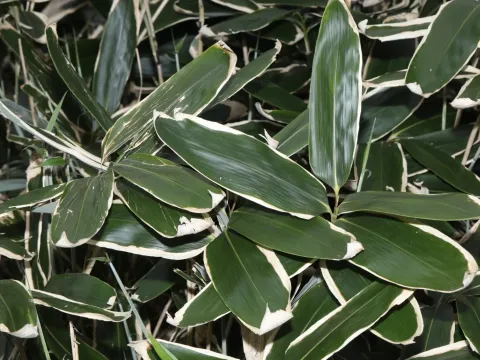
Nipponobambusa
Nipponobambusa
Nipponobambusa is typically propagated vegetatively by dividing existing rhizomes, as seed production is infrequent and unpredictable.
What the section contains
Nipponobambusa
Spring is the ideal season for planting, allowing the rhizomes to establish themselves before the heat of summer or the arrival of winter.
Segments of rhizomes with several healthy nodes should be selected and planted at a depth of 10 to 15 centimeters in well-tilled soil.
When establishing a new site, ensure the planting area is cleared of competing weeds to allow the bamboo to spread naturally.
Adequate spacing, typically around one meter apart, is essential to provide enough room for the vigorous underground root systems to expand.
Belonging to the Poaceae family, Nipponobambusa thrives in temperate climates with stable moisture levels and fertile, loamy soils.
The plant performs best in soils with a slightly acidic to neutral pH, provided that drainage is excellent to prevent root rot.
Regular irrigation is necessary during the growing season, especially during periods of drought, as the plant is not naturally adapted to arid conditions.
Light requirements are flexible, ranging from full sun to partial shade, though bright indirect light usually yields the best foliage appearance.
Mulching the base of the plant with organic matter helps maintain consistent soil temperature and moisture levels throughout the year.
The most common pests affecting this culture include spider mites and aphids, particularly in hot and dry weather conditions.
Fungal diseases, such as leaf spot or root rot, can occur if the soil is poorly drained or if humidity remains stagnant around the plant.
Overcrowding of stems can lead to poor air circulation, increasing the risk of powdery mildew outbreaks on the leaf surfaces.
Proper sanitation, including the removal of dead or diseased culms, is critical to maintaining the overall health of the plantation.
In colder regions, frost damage to the foliage is a primary concern, requiring protective covering or windbreaks during severe winter weather.