
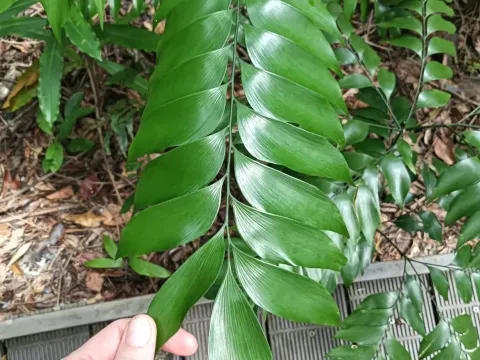
Bowenia spectabilis
Bowenia spectabilis
Bowenia spectabilis is a distinctive cycad belonging to the Zamiaceae family, historically and botanically significant as a living fossil. It is native to the tropical rainforests of Queensland, Australia.
What the section contains
Bowenia spectabilis
This species thrives in high humidity and warm temperatures, typically ranging between 20°C and 28°C. It is strictly sensitive to freezing conditions and cold drafts.
The soil requirement involves a well-draining, humus-rich mix. The plant possesses a tuberous root system that is highly susceptible to rot, making drainage an absolute priority in cultivation.
In terms of light, Bowenia spectabilis is adapted to deep shade or filtered forest light. Exposure to direct sunlight often results in severe leaf scorch and dehydration.
Regular misting or the use of humidifiers is essential to replicate the natural rainforest environment, which sustains the plant's lush, pinnate foliage.
Root rot is the most common and devastating issue for this crop, usually caused by overwatering or compacted soil that lacks proper aeration.
Pest infestations such as scale insects (Coccoidea) can be problematic, as they attach to the sturdy leaflets and drain nutrients, leading to yellowing of the fronds.
Mealybugs are another common threat, often hiding in the base of the petioles where they are difficult to reach with standard contact insecticides.
Prevention relies on rigorous cultural practices: ensuring the substrate dries slightly between waterings and maintaining adequate air circulation in growing areas.
If symptoms of fungal infection appear, it is recommended to treat the soil with systemic fungicides and physically remove any infected plant parts immediately.