
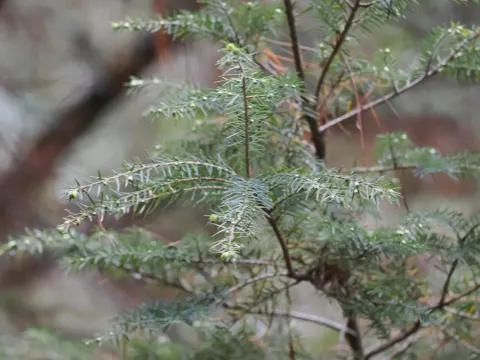
Yunnan hemlock
Tsuga yunnanensis
Yunnan hemlock (Tsuga yunnanensis) is an evergreen coniferous species belonging to the Pinaceae family. It is a large, stately tree known for its conical shape, slender branches, and deep green needles that provide an elegant texture to any forest or park setting.
What the section contains
Yunnan hemlock
The native distribution of this species is confined to the mountain forests of southwestern China. It thrives in high-altitude environments, where it experiences cool temperatures and consistent moisture throughout the year, which is essential for its physiological health.
For cultivation, this tree requires acidic to neutral soil that is well-drained and nutrient-rich. It is highly sensitive to soil compaction and waterlogging, so planting on elevated sites or incorporating organic matter to improve structure is highly recommended for success.
Climate adaptability of the Yunnan hemlock is limited to humid, cool temperate regions. It performs best in partial shade or areas sheltered from direct, scorching afternoon sunlight, which can otherwise damage the delicate foliage and lead to moisture loss.
Standard horticultural practices for this species include maintaining consistent soil moisture through mulching and supplemental irrigation during dry spells. Fertilizer applications should be limited to balanced formulas specifically designed for acid-loving or conifer species to prevent nitrogen burn.
Common biological threats to the Yunnan hemlock include fungal root diseases often associated with excessive soil moisture. Proper site selection and drainage management are the most effective strategies for preventing these problematic infections.
Pest pressures primarily involve sap-sucking insects such as aphids or hemlock woolly adelgids in certain regions. Regular monitoring and the application of horticultural oils or systemic insecticides can help manage these populations and maintain the tree's vigor.