
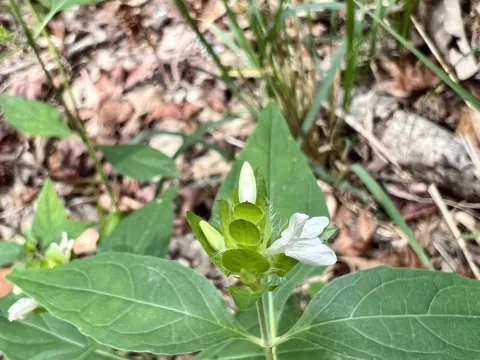
Yeatesia laetevirens
Yeatesia laetevirens
Yeatesia laetevirens is a member of the Acanthaceae family, native to the southeastern United States. This perennial herb is naturally adapted to moist, shady environments such as riparian corridors and dense forest understories.
What the section contains
Yeatesia laetevirens
The plant features distinctively bright green, opposite leaves and a clumping growth habit. Its botanical structure allows it to thrive in low-light conditions, making it a specialized plant for managed landscapes that mimic natural woodland settings.
To cultivate Yeatesia laetevirens successfully, one must provide rich, humus-based soil with excellent drainage. It is essential to keep the soil consistently moist without allowing it to become waterlogged, as the root system is sensitive to prolonged saturation.
This species performs best in temperatures ranging between 65°F and 80°F (18°C–27°C). It does not tolerate frost well, meaning that in temperate regions, it must be protected or grown as a container plant that can be moved indoors during colder months.
In ornamental horticulture, this plant is valued for its lush foliage and its ability to persist in shaded areas where other flowering perennials might fail. It provides a unique texture and vibrant color contrast in shade garden designs.
The primary threats to Yeatesia laetevirens include fungal infections such as leaf spots and root rot. These issues are frequently associated with poor air circulation or over-watering in confined garden settings.
Common pests like spider mites or aphids may occasionally infest the plant, particularly if the humidity levels drop significantly. Regular monitoring and maintaining appropriate microclimatic conditions are the most effective management strategies.