
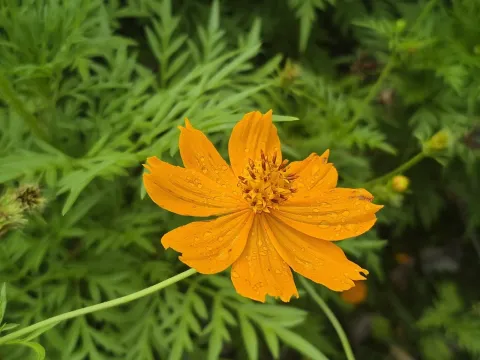
Yellow cosmos
Bidens sulphurea
Yellow cosmos, scientifically known as Bidens sulphurea, is a heat-loving annual that should be sown after all danger of frost has passed in spring.
What the section contains
Yellow cosmos
Direct sowing into the soil is preferred, placing seeds at a depth of about 0.5 centimeters in well-prepared, loose soil beds.
For earlier flowering, seeds can be started indoors in trays about four to six weeks before the last expected frost date in your region.
The seeds require light and moderate warmth to germinate, so they should not be buried too deeply in the planting medium.
Seedlings should be hardened off before being transplanted outside to ensure they successfully adapt to outdoor temperatures and light conditions.
As a member of the Asteraceae family, this plant requires full sun exposure to produce its characteristic vibrant yellow and orange blossoms.
The ideal soil for yellow cosmos is well-drained, moderately fertile, and slightly neutral to acidic in terms of pH levels.
While the plant is quite drought-tolerant once established, providing supplemental water during prolonged heat waves ensures continuous blooming.
The spacing between individual plants should be maintained at roughly 30 to 45 centimeters to allow for optimal air circulation.
Avoiding excessive fertilization is crucial, as too much nitrogen will promote lush foliage growth at the expense of flower production.
Aphids are the most common pest observed on Bidens sulphurea, especially during the early stages of rapid vegetative growth.
Spider mites can become a nuisance during hot, dry spells, potentially leading to yellowing or speckling of the leaves if left untreated.
Powdery mildew may occur if the plants are spaced too closely together or if air humidity levels remain high for extended periods.
Root rot is typically associated with overwatering or poorly draining soil, which emphasizes the need for a strict irrigation schedule.
Integrated pest management, including regular inspection and horticultural soap application, is recommended to keep plants healthy throughout the season.
The primary use of yellow cosmos is ornamental, making it a popular choice for garden beds, borders, and meadow-style landscaping projects.
The flowering period is exceptionally long, spanning from mid-summer until the first frost, providing lasting aesthetic value to the garden.
Deadheading is highly recommended as it prevents the plant from setting seed too early and encourages the production of secondary blooms.
The flowers are frequently used in cut floral arrangements due to their bright color and durability in vases when handled correctly.
Seed collection for the following year is simple; allow the flower heads to dry on the plant before harvesting them in the late autumn.