
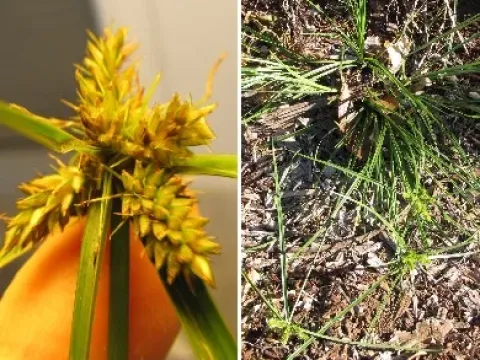
Yellow flatsedge
Cyperus flavus
Yellow flatsedge (Cyperus flavus) is a perennial herbaceous plant belonging to the Cyperaceae family. It is a specialized crop that thrives in wet environments and is known for its distinct botanical architecture within the sedge group.
What the section contains
Yellow flatsedge
The plant originates from Central and South America, where it occupies diverse ecosystems ranging from riparian zones to seasonal wetlands. Its evolutionary history has made it highly resistant to fluctuating water levels in its native range.
Regarding soil and climate, the crop requires consistently moist, nutrient-rich soils with good organic content. It performs best in regions with warm, stable temperatures, as it lacks significant frost tolerance and requires long periods of active growth.
Agrotechnical practices for Cyperus flavus focus primarily on managing water levels and soil moisture retention. Providing adequate space between plants is crucial to avoid competition for resources in high-density planting scenarios.
In terms of practical use, the plant is primarily researched for its utility in ecological restoration projects, including wetland stabilization and soil erosion control in moisture-prone agricultural zones.
The primary threats to Cyperus flavus include fungal infections such as leaf spot and rust, which are particularly prevalent in high-humidity environments with stagnant air.
Common pests include specialized sedge-feeding insects and root-knot nematodes, which can significantly inhibit plant growth and reduce overall biomass yield.
Effective disease management strategy involves maintaining optimal soil drainage and avoiding overhead irrigation, which minimizes the risk of leaf pathogens spreading.
Regular inspection of the root system is recommended to detect any signs of infestation or rot caused by soil-borne pathogens or anaerobic conditions.
Integrated Pest Management (IPM) practices, including the use of beneficial predatory insects, provide an effective and environmentally friendly solution for maintaining crop health.