
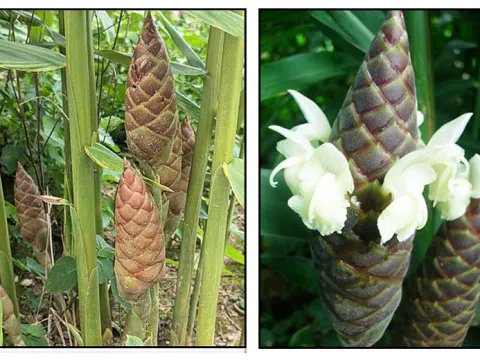
Zingiber cassumunar
Zingiber cassumunar
Zingiber cassumunar is propagated vegetatively through the division of healthy rhizomes. The optimal planting period begins at the onset of the rainy season, when the soil is sufficiently moist and warm to encourage rapid sprouting of the buds.
What the section contains
Zingiber cassumunar
For planting material, healthy rhizome sections weighing approximately 50 grams are selected. Each fragment must contain at least two or three viable buds to ensure vigorous initial growth and high-quality plant development.
Rhizomes are typically planted at a depth of 5 to 10 centimeters, maintaining a spacing of 40 to 50 centimeters between plants. Proper spacing is crucial to prevent competition for light and nutrients, which ultimately increases the total yield per hectare.
In commercial cultivation, raised beds with excellent drainage are used to prevent waterlogging, which is a major risk for tropical rhizomatous crops. Mulching with organic matter is highly recommended to conserve soil moisture and suppress weeds.
As a perennial member of the Zingiberaceae family, the plant requires periodic rotation of the planting site. Avoiding monoculture is a standard practice to prevent the accumulation of soil-borne pathogens that thrive in ginger-rich environments.
As a tropical species, Zingiber cassumunar requires warm temperatures consistently between 25 and 32 degrees Celsius. Any significant drop in temperature during the active growth phase can lead to metabolic stress and stunted rhizome development.
The plant thrives in areas with high light intensity, although partial shade during the early establishment phase can prevent leaf scorch. High sunlight levels during the main growth phase are essential for the synthesis of volatile oils in the rhizomes.
Soils must be loose, friable, and rich in organic matter. Heavy clay soils are generally unsuitable as they hinder the expansion of the rhizome and increase the risk of decay during periods of heavy rainfall.
Consistent moisture is required throughout the growing season, but water balance is the most critical factor. The soil must be moist but never saturated, as poor drainage is the primary cause of root and rhizome rot in this species.
The application of compost or well-decomposed manure before planting provides a steady supply of nutrients, particularly nitrogen and potassium, which are essential for developing large, healthy, and aromatic rhizomes.
The cycle from planting to harvest usually lasts between 8 and 10 months. The most accurate indicator for maturity is the natural yellowing and gradual drying of the aerial stems, signaling that the plant has ceased active vegetative growth.
Under optimal agricultural management, producers can expect an average yield of 15 to 25 metric tons per hectare. Yields are highly dependent on the quality of the starting material and the specific genetic characteristics of the cultivar used.
Successful management involves careful observation of the plant's life cycle. Harvesting at the peak of maturity ensures the highest concentration of essential oils, which are highly valued in both the cosmetic and pharmaceutical industries.
Post-harvest handling is critical to preserving the quality of the raw rhizomes. Gently cleaning the dirt without damaging the skin is essential to prevent entry points for storage fungi and bacteria.
Once harvested, the product should be kept in cool, well-ventilated conditions. Proper sorting allows farmers to separate high-quality rhizomes for the premium medicinal market from those destined for essential oil extraction.
Root and rhizome rot, caused by soil-borne fungi such as Pythium and Fusarium species, are the most significant threats to cultivation, especially in environments with poor drainage and high humidity.
Plant-parasitic nematodes represent a serious challenge in many regions, causing galls on the roots and stunting plant growth. Integrated pest management, including crop rotation and the use of clean planting stock, is the standard control method.
Various defoliating insects, including larvae of certain moths, can reduce the leaf area, which limits the photosynthetic capacity of the plant and slows down the accumulation of nutrients in the rhizome.
Preventive measures such as field sanitation, regular monitoring of plant health, and the removal of infected individuals are far more effective than chemical control, which may have limited success against deep-seated rhizome infections.
Environmental conditions play a massive role in disease susceptibility; therefore, managing soil structure and avoiding nitrogen over-application can help maintain a more robust plant defense system against common pathogens.
Harvesting is usually performed by hand or with specific machinery designed to lift the rhizomes gently. Avoiding physical injury to the rhizome structure is vital to maintaining market quality and extending shelf life.
The procedure starts with loosening the soil around the plant using specialized tools to ensure the rhizome is extracted as a whole unit, which is much easier to process and clean than fragmented pieces.
Post-harvest cleaning involves removing excess soil and debris. Following this, the rhizomes are graded by size and health status to maximize profit margins and ensure consistent quality for the end buyers.
The harvested rhizomes are typically processed into dried slices or distilled to produce Plai oil, an essential component in traditional medicinal preparations, particularly those used for muscle relief and anti-inflammatory treatments.
Logistics from the field to the drying facility must be efficient to prevent spoilage. Establishing a reliable cold chain or a proper drying process is essential to maintain the integrity of the bioactive compounds for the entire storage duration.