
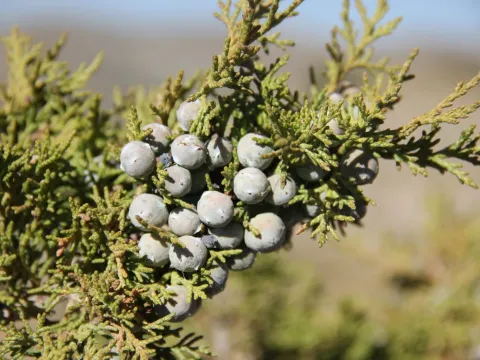
Zeravshan juniper
Juniperus seravshanica
Zeravshan juniper (Juniperus seravshanica) is a prominent member of the Cupressaceae family, known for its status as a robust tree species adapted to mountain environments. It is a long-lived plant that can reach significant heights, providing essential biomass and structure to high-altitude ecosystems.
What the section contains
Zeravshan juniper
The native range of this species is centered in the mountains of Central Asia. It thrives in rugged, rocky terrain, often dominating slopes where other tree species struggle to establish themselves. This natural distribution highlights its evolutionary resilience to extreme environmental stressors.
The climatic requirements of this juniper focus on its need for abundant sunlight and its ability to withstand severe continental conditions. It is highly drought-tolerant, capable of surviving through long periods of low precipitation thanks to an extensive and deep root system that anchors it securely.
Regarding soil preferences, the plant is remarkably undemanding. It prefers well-drained, rocky, or calcareous substrates. While it does not require fertile soil, providing proper drainage is vital during the early establishment phase to prevent root rot caused by stagnant water.
From an agricultural and forestry perspective, Zeravshan juniper is primarily valued for its soil stabilization properties. Its ability to thrive in poor soils and prevent hillside erosion makes it an important plant for landscape restoration and ecosystem protection in arid mountain regions.
The plant is susceptible to certain fungal infections, particularly rust diseases that can cause discoloration of the needles and weaken the overall structure of the tree. Effective management involves maintaining spacing that allows for proper air circulation to keep the foliage dry.
Insect pests, such as juniper scale and mites, represent a common threat to younger saplings. Regular monitoring of the foliage and the application of targeted insecticides or horticultural oils can help manage populations before they cause significant damage to the plant.
Overgrazing by livestock is a major threat in natural habitats, leading to the loss of younger generation trees. When cultivated, ensuring proper fencing or protection is essential to prevent mechanical damage to the bark and young shoots, which can lead to secondary infections.
Canker and other stem-related diseases can occur if the tree is stressed by improper environmental conditions or mechanical wounds. Proper sanitization of pruning tools and minimizing unnecessary damage to the tree's bark are crucial preventive measures against these pathogens.
Lastly, while the species is hardy, it is sensitive to severe air pollution, which can weaken its defensive mechanisms. Planting these trees in clean, open mountain or rural areas is recommended to ensure the long-term health and vitality of the stand.