
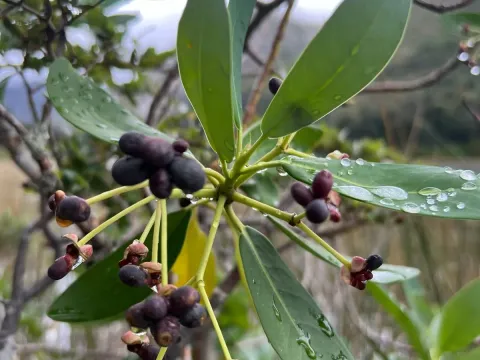
Winter's bark
Drimys winteri
Winter's bark (Drimys winteri) is an evergreen tree or large shrub belonging to the Winteraceae family. It is recognized for its glossy, dark green leaves and clusters of fragrant, jasmine-like flowers.
What the section contains
Winter's bark
The species is native to the temperate rainforests of South America, specifically ranging across Chile and Argentina. It thrives in maritime climates that provide consistent moisture and mild temperature cycles.
To cultivate this plant successfully, one must provide moist, fertile, and slightly acidic soil. It performs best in sites with excellent drainage, as the roots are sensitive to stagnant water and anaerobic conditions.
Requirements for light include semi-shaded positions where the plant is protected from harsh, direct sunlight. In its natural habitat, it grows under a forest canopy, which dictates its need for dappled or indirect light.
Agricultural management requires consistent irrigation to ensure the soil never dries out completely. Applying a layer of organic mulch around the base of the plant is highly recommended to retain soil moisture and regulate ground temperature.
The primary economic value of the tree lies in its bark, which is traditionally harvested and used in herbal medicine. It is a well-known antiseptic and has historically been used to prevent scurvy due to its vitamin content.
The bark contains various active compounds, including polygodial, which provides its characteristic peppery flavor and significant antibacterial and antifungal properties used in modern phytotherapy.
Beyond its medicinal applications, Winter's bark is highly prized in horticulture as an ornamental plant. It provides year-round structure and beauty, making it a popular choice for gardens with temperate microclimates.
The timber of the tree is lightweight and soft, often utilized by artisans for small-scale woodcrafts. However, it is not currently considered a major commercial source of timber for industrial construction purposes.
Yielding high-quality bark requires selective harvesting methods that respect the tree's overall health. Sustainability is key, as removing too much bark at once can kill the specimen, thus careful rotation is employed in cultivation.
Root rot is the most common threat to Drimys winteri, usually caused by over-irrigation or inadequate drainage. Preventing waterlogging is the most effective strategy for ensuring the long-term health of the crop.
Pests such as scale insects or aphids may infest the leaves, particularly in low-airflow conditions. Regular inspection and the use of insecticidal soap or biological controls can effectively manage these populations.
Wind exposure poses a significant risk, especially for younger trees. Strong winds can strip moisture from the foliage and damage the delicate growth tips, necessitating the use of windbreaks in exposed garden settings.
Nutritional stress may manifest as yellowing of leaves or stunted growth if the soil pH becomes too alkaline. Periodic testing and soil amendment are essential to keep the plant in its optimal growth range.
Disease prevention also involves keeping the foliage dry during humid weather to prevent fungal leaf spots. Proper spacing of plants ensures adequate air circulation and lowers the risk of systemic fungal infections.