
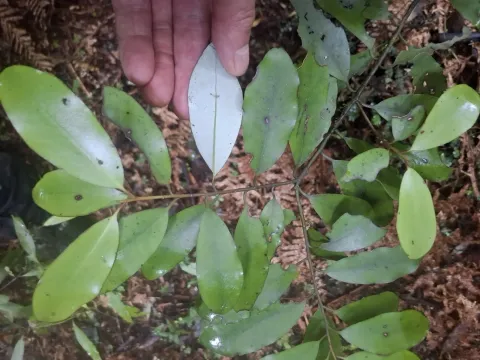
Pseudowintera
Pseudowintera
Pseudowintera is a genus of evergreen shrubs and small trees native to New Zealand, belonging to the ancient Winteraceae family. These plants are scientifically notable for their primitive floral structures, which provide significant insights into the evolution of flowering plants.
What the section contains

Pseudowintera
In their native habitat, these shrubs grow in cool, damp forest environments. They are particularly prized by collectors for their leathery, often colorful leaves that contain polygodial, a compound known for its intense peppery taste and natural anti-herbivore properties.
To cultivate Pseudowintera successfully, it is essential to replicate their natural forest-floor conditions. They require rich, well-draining soil that remains consistently moist. Poor drainage is the most common cause of failure in cultivating this genus.
Environmental conditions should include partial shade and protection from harsh, drying winds. These plants are best suited for temperate climates where summers are mild and humidity levels remain relatively high throughout the growing season.
Propagation is primarily achieved through cuttings, as seed germination is often slow and requires specific environmental cues. Maintaining a stable, cool root zone temperature is critical for establishing young specimens in nursery settings.
Pseudowintera is generally robust against many common garden pests due to the presence of secondary chemical compounds that act as natural deterrents. However, they are not entirely immune to environmental stressors and related pathogens.
Under greenhouse or indoor conditions, the primary threats include spider mites and mealybugs. These pests thrive in dry environments and can quickly colonize the plant if humidity levels are not properly regulated.
Root rot is the most significant disease risk associated with this genus. It is almost always a result of overwatering or the use of heavy, waterlogged potting mixes that prevent proper oxygenation of the root system.
If signs of leaf spotting or wilting appear, it is imperative to check the root ball for signs of decay. Adjusting the watering schedule and applying appropriate fungicides can help manage fungal outbreaks if caught early.
Good ventilation and consistent airflow are essential to prevent moisture accumulation on foliage, which can encourage fungal growth. Keeping the growing area clean and avoiding crowding of plants will greatly reduce the risk of infestation and disease.