
Wolffiella floridana
Wolffiella floridana
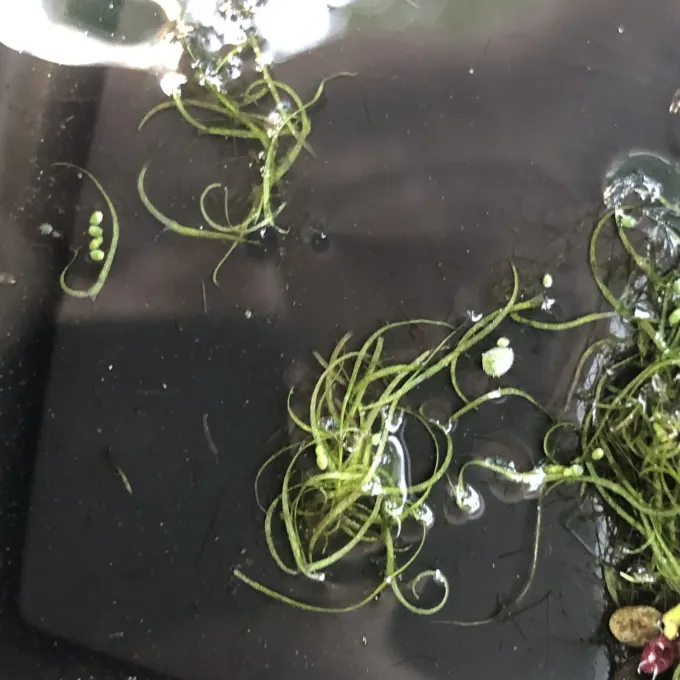
Description
Sowing dates
Wolffiella floridana is a unique aquatic plant belonging to the Araceae family, specifically the duckweed subfamily. Unlike traditional crops, it does not require soil and thrives as a free-floating hydrophyte on the surface of freshwater bodies.
Propagation occurs exclusively through vegetative budding of new thalli. For optimal growth, the initial seeding should be performed in stable water conditions with temperatures consistently above 20 degrees Celsius.
When starting a new production cycle, clean pools or tanks are inoculated with a starter culture. The seeding density should be carefully managed to ensure rapid surface coverage while allowing sufficient space for exponential growth.
In industrial settings, light management is essential. Extended photoperiods combined with controlled lighting boost photosynthetic activity, which is the primary driver of the rapid biomass accumulation characteristic of this species.
Production in open-air ponds is seasonal, limited to warmer periods of the year. For year-round operations, controlled-environment greenhouses with heating and supplemental lighting systems are required.
Growing requirements
This species is highly dependent on the chemical composition of the water. It thrives in nitrogen-rich and phosphorus-rich environments, making it an excellent candidate for wastewater treatment and nutrient remediation.
Ideal water temperatures range from 20 to 28 degrees Celsius. Metabolic rates decrease significantly at temperatures below 15 degrees, and the plant may enter a dormant state or settle to the bottom during cold weather.
The pH of the water should be kept between 6.5 and 8.0. Significant fluctuations in acidity or alkalinity can damage the delicate thalli and cause a collapse of the population within the tank or pond.
Wolffiella floridana prefers calm, stagnant, or slow-moving water. High currents or significant wave action must be avoided, as they interfere with nutrient uptake and physical growth patterns.
CO2 enrichment is often employed in high-density production systems to maximize biomass yield. Carbon availability is a limiting factor, and increasing it significantly enhances the division rate of the plants.
Yield
Wolffiella floridana is recognized as one of the fastest-growing plants in the world. Under ideal conditions, it can double its biomass in as little as 2 to 4 days, making it a highly efficient biological factory.
Yields per square meter of water surface significantly outperform those of most terrestrial forage crops. This efficiency makes it an attractive commercial option for sustainable feed production.
The primary use of the harvested biomass is as a high-protein feed ingredient for aquaculture, particularly for herbivorous fish species. It provides an excellent amino acid profile and high mineral content.
Beyond feed, the biomass can be processed into organic fertilizers or high-value lipids. The rapid turnover of the crop allows for frequent harvests, ensuring a continuous supply of material throughout the season.
Economically, the crop's ability to convert simple nutrients into complex proteins makes it a cornerstone of integrated multi-trophic aquaculture systems, where it serves both as a feed source and a water purifier.
Main diseases and pests
Chemical contamination is the greatest threat to this crop. Heavy metals, pesticides, and other toxins can be bioaccumulated within the thalli, rendering the harvested product unsafe for animal consumption.
Pathogenic fungi can cause outbreaks in crowded ponds, manifesting as necrotic spots and softening of the plant tissue. Proper water hygiene and population management are key to preventing these infections.
Pests, including various aquatic insects and larvae, can cause substantial damage to the population. Regular monitoring of the pond surface is necessary to identify and mitigate pest infestations before they spread.
Competition from other species, such as cyanobacteria or larger algae, can suppress the growth of Wolffiella. Algal blooms can shade out the crop and compete for essential mineral nutrients.
Thermal stress is a significant concern. Temperatures exceeding 35 degrees Celsius can prove fatal to the colony, emphasizing the need for temperature control mechanisms in intensive farming operations.
Harvesting
Harvesting is performed mechanically by skimming the water surface with specialized nets or conveyor belt systems. This allows for the collection of large quantities of biomass with minimal impact on the remaining plants.
The frequency of harvesting is determined by the growth rate of the crop. To maintain peak productivity, it is essential to harvest at regular intervals to keep the population density within the optimal growth range.
Post-harvest processing involves thorough washing to remove any debris or unwanted organisms. Freshly harvested biomass must be processed quickly to maintain nutritional value and prevent rapid degradation.
For some applications, fresh biomass is directly introduced into aquaculture ponds as a live food supplement. This practice reduces the need for energy-intensive drying and pelleting processes.
If drying is required, moisture must be reduced quickly using industrial dryers or sun-drying racks in a controlled manner to prevent mold growth and ensure a stable, shelf-safe product for feed storage.