
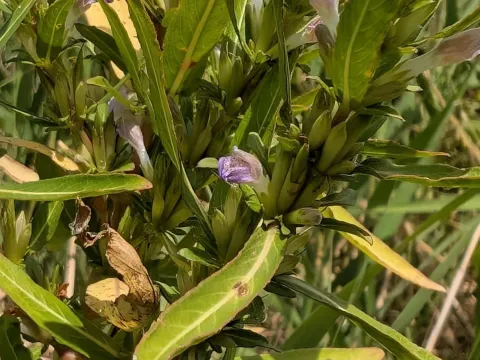
Willow hygrophila
Hygrophila salicifolia
The propagation of willow hygrophila is primarily conducted through stem cuttings, which is the most reliable method for maintaining population density in cultivation.
What the section contains
Willow hygrophila
Cuttings should be taken from healthy, vigorously growing parent plants, ensuring that each segment includes at least several nodes for root development.
For optimal establishment, the cuttings are planted into a nutrient-rich substrate, which provides the necessary minerals for rapid vegetative growth.
It is recommended to plant in groups to create a dense canopy effect, which improves the aesthetic and biological function of the culture in aquatic systems.
Successful planting requires stable temperatures to ensure that the cutting successfully transitions from a detached state to an autonomous, growing plant.
Hygrophila salicifolia is a member of the Acanthaceae family, naturally occurring in the tropical regions of Southeast Asia along stream banks and wetlands.
The culture requires high levels of light intensity to maintain its characteristic narrow, willow-like leaf structure and deep green coloration.
A well-aerated, fertile substrate is preferred, as the plant extracts a significant portion of its required nutrition through its extensive root system.
Water parameters should be maintained at a neutral to slightly acidic pH, with regular water changes to ensure a consistent supply of essential nutrients.
As a hygrophyte, it thrives in both fully submerged and emergent conditions, making it a versatile choice for various hydroponic and paludarium setups.
Algae infestations represent the primary challenge for this crop, as aggressive algae growth can easily outcompete the plant for space and light.
Nutrient deficiencies, particularly involving iron and potassium, often result in leaf chlorosis and inhibited development of the terminal buds.
Pests such as certain types of aquatic snails can damage the tender new shoots, leading to stunted growth and increased susceptibility to decay.
Fungal pathogens may emerge in environments with poor circulation, leading to stem rot and the subsequent loss of affected plant biomass.
Effective management involves maintaining a balanced ecosystem where the plant's growth rate exceeds the potential for algal or pathogen proliferation.