
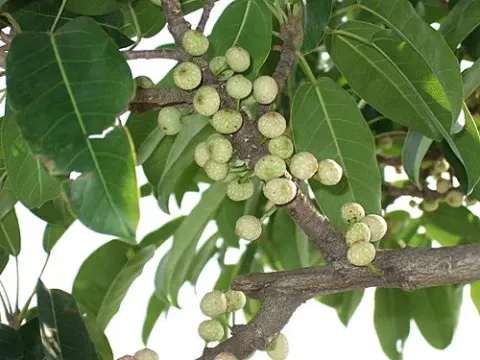
Wight's Fig
Ficus wightiana
Wight's Fig (Ficus wightiana) is a prominent evergreen species belonging to the Moraceae family. It is widely recognized for its robust growth habit and its significant presence in the tropical ecosystems of Southeast Asia.
What the section contains
Wight's Fig
Originating from the humid regions of China and adjacent islands, this plant thrives in areas with consistent precipitation. It is classified as an ornamental and structural plant, frequently used in public green spaces for shade and aesthetic purposes.
Morphologically, the species features dense, glossy foliage and a sprawling root system typical of large fig trees. The leaves are generally elliptic to ovate, providing a lush appearance that is highly valued in garden architecture.
Regarding climatic needs, Ficus wightiana requires a frost-free environment to maintain its health and physiological functions. It prefers temperatures between 20°C and 30°C and high atmospheric humidity to prevent leaf dehydration.
Soil requirements focus on high drainage capacity and moderate fertility levels. While it can adapt to various soil textures, it performs best in well-aerated substrates rich in organic matter, which support its rapid development and canopy expansion.
The primary threats to this species include common tropical plant pests such as scale insects, whiteflies, and spider mites. These organisms can severely damage the photosynthetic apparatus if left uncontrolled in the early stages of infestation.
Root rot, often caused by Phytophthora or Pythium species, remains the most dangerous pathological condition for the tree. Overwatering or lack of proper soil drainage is almost always the triggering factor for these fungal outbreaks.
Leaf spot diseases, often resulting from bacterial or fungal pathogens, frequently appear during rainy seasons or in areas with poor ventilation. Maintaining clean cultivation practices and pruning dead branches help reduce the inoculum load.
Integrated Pest Management (IPM) is highly recommended to ensure the longevity of the trees. This approach involves regular monitoring, the use of biological control agents, and the judicious application of chemical treatments only when necessary.
Abiotic stresses, such as sudden temperature drops or severe water deficiency, can significantly weaken the tree's resistance. Ensuring consistent environmental stability is essential to maintain a strong and healthy plant structure.