
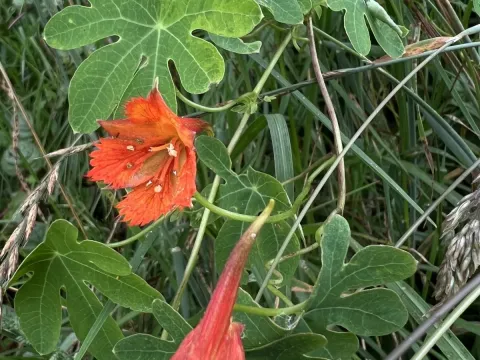
Smith's Nasturtium
Tropaeolum smithii
The sowing of Smith's Nasturtium is primarily carried out in the spring period, once the threat of night frosts has passed, as the crop is extremely sensitive to low temperatures. Seeds are sown directly into open ground or into pre-prepared containers for seedlings, which helps accelerate the onset of flowering.
What the section contains
Smith's Nasturtium
The optimal planting depth for seeds is about 1.5–2 centimeters, ensuring good contact with the soil and sufficient moisture. Seeds have high germination energy at substrate temperatures no lower than +18...+20 degrees Celsius, so mulching is recommended to retain heat.
To ensure uniform emergence, the soil must be loose and well-aerated. When sowing in containers, it is important to use a nutrient-rich mixture with the addition of sand or perlite to avoid water stagnation in the root zone during the initial stages of plant development.
When growing in regions with short summers, the seedling method is the only way to complete a full vegetative cycle. Transplanting young plants to a permanent location should be carried out with maximum care to avoid damaging the fragile root system.
The recommended planting scheme assumes a distance between specimens of at least 40–50 centimeters, as Smith's Nasturtium possesses vigorous vine growth and needs space for full development and bush ventilation.
Smith's Nasturtium (Tropaeolum smithii) is a perennial herbaceous vine belonging to the Tropaeolaceae family. It originates from the high-altitude regions of the Andes, which determines its preference for a cool and humid climate, unlike many other species in this family.
The plant grows best in areas with dappled sunlight or semi-shade. Direct midday rays can cause leaf burns and lead to premature wilting of the decorative parts, especially if soil moisture is insufficient.
The crop has moderate soil requirements, preferring fertile, well-drained substrates with a slightly acidic or neutral pH level. Soils excessively rich in nitrogen stimulate overgrowth of green mass at the expense of abundant flowering.
An important factor for success is providing support, as this climbing plant can reach significant lengths. Using trellises, nets, or natural supports in the form of shrubs allows the plant to effectively utilize vertical space.
The crop requires regular but moderate watering. Water stagnation is a critical factor leading to root rot and the development of pathogenic microflora, so the presence of a high-quality drainage layer is a mandatory condition when planting in containers.
One of the main threats to this crop is insect pests, in particular, aphids, which can quickly colonize young shoots and leaves, sucking out cell sap. Regular inspection of plants allows for timely detection of colonies and the prevention of infestation.
The spider mite poses a danger in conditions of high temperatures and low air humidity. It manifests itself by the appearance of tiny light spots on leaves and fine webbing, requiring the use of acaricidal agents or regular water spraying of the foliage.
Among fungal diseases, grey mold is the most common, resulting from waterlogging and poor air circulation. Affected areas must be immediately removed, and plants treated with copper-based fungicides or biological products.
Bacterial wilt can also affect Smith's Nasturtium if crop rotation and watering rules are not followed. The infection spreads through contaminated soil, so it is essential to disinfect the growing medium and maintain cleanliness in the garden area.
- Prevention through seed disinfection before sowing.
- Regular soil cultivation to prevent water stagnation.
- Timely removal of weeds that can serve as intermediate hosts for pests.