
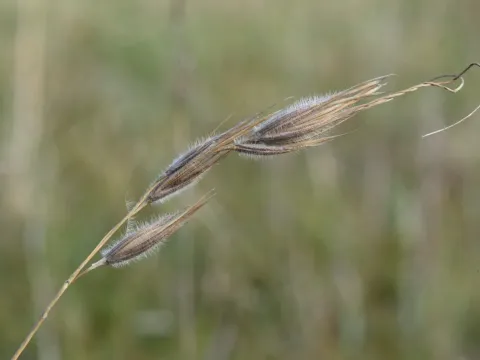
Tristachya hispida
Tristachya hispida
Tristachya hispida is a perennial grass species belonging to the Poaceae family, primarily native to the grasslands of Southern and Eastern Africa. It is recognized for its ability to thrive in challenging environments where other forage crops might struggle.
What the section contains
Tristachya hispida
The species is highly adaptable to a variety of soil types, including sandy, acidic, and nutrient-poor soils. Its deep root system allows the plant to tap into moisture reserves, providing drought resistance that is highly valued in arid agricultural regions.
Botanically, Tristachya hispida is characterized by its tufted growth habit and pubescent leaves. These hairs serve as an adaptation to reduce transpiration, helping the plant maintain physiological function during periods of heat stress.
Climate requirements include a preference for open, sunny environments. The plant is well-suited for temperate and subtropical climates, where it contributes to the overall stability of the local vegetation cover in diverse ecosystems.
In agriculture, it is primarily used for pasture grazing. Due to its hardiness, it serves as a reliable source of biomass for livestock in grazing systems where management of marginal lands is essential for economic viability.
Leaf spot diseases are common in Tristachya hispida when environmental conditions become overly humid, allowing fungal pathogens to proliferate on the foliage and reducing the quality of the biomass.
Grasshoppers and other locust-type insects represent the most significant pest threat, capable of rapid and widespread defoliation, which can jeopardize the productivity of the entire grassland area.
Root-knot nematodes can potentially affect the plant's health in soils where the same area is repeatedly used without appropriate crop rotation or resting periods, leading to stunted growth.
Overgrazing remains the greatest management challenge, as excessive consumption prevents the plant from replenishing its energy reserves in the roots, eventually leading to a loss of vigor and species density.
Integrated pest management, focusing on biological controls and proper grazing intervals, is recommended to mitigate these threats and ensure the long-term sustainability of the pasture.