
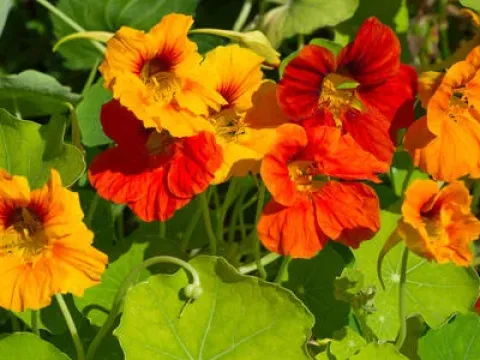
Tropaeolum hybrids
Tropaeolum hybrids
Tropaeolum hybrids, belonging to the Tropaeolaceae family, are typically cultivated as annual crops in temperate climates. Seeds should be sown directly into open ground in May, after the danger of night frost has passed, as the plant is extremely sensitive to cold temperatures.
What the section contains
Tropaeolum hybrids
For earlier blooming, a seedling method is commonly practiced. Seeds are sown into individual peat pots during April, ensuring a germination temperature of approximately 18–20 degrees Celsius. Using individual containers is crucial to prevent damage to the delicate root system during transplanting.
Transplanting hardened seedlings to their permanent location is carried out with a spacing of 30x30 or 40x40 centimeters, depending on the vigor of the specific hybrid. The seeds should be planted at a depth of 2 centimeters; deeper planting can significantly reduce germination rates.
The period from initial emergence to the start of flowering typically ranges from 6 to 8 weeks. Consistent soil moisture after sowing promotes uniform germination, while slight shading helps preserve moisture levels during the first days of seedling growth.
In regions with milder climates, winter sowing is possible, although this method remains risky in most areas due to the high probability of seed decay or damage caused by excessive soil moisture during the dormant period.
The crop is highly light-demanding and heat-loving, requiring locations that receive full sun and are protected from strong winds. In conditions of insufficient lighting, the plants tend to produce lush vegetative mass while forming very few flowers.
Tropaeolum hybrids have moderate soil requirements, thriving best in light, fertile, sandy, or loamy soils with excellent drainage. An excess of organic fertilizers, particularly fresh manure, often leads to excessive leaf growth at the expense of blossom development.
During the active growth season, the crop requires regular irrigation, particularly during dry spells. However, waterlogged soil can lead to root rot and fungal infections, making it imperative to avoid stagnant water conditions near the root zone.
To support soil fertility, application of balanced mineral fertilizers with low nitrogen content is recommended before planting. Excessive nitrogen promotes foliage growth at the expense of vibrant blossoms, a common issue with most hybrid ornamental varieties.
Maintaining a weed-free environment is essential, as the crop lacks strong competitive ability during its initial growth phase. Light cultivation between plants helps improve soil aeration and prevents the formation of a surface crust that hinders development.
Tropaeolum hybrids are susceptible to aphid infestations, which frequently congregate on the undersides of leaves and on young stems. Effective control can be achieved through systemic insecticides or safer methods such as soap-based sprays mixed with wood ash.
Bacterial wilt is a significant threat, manifesting as yellowing and loss of turgor in the leaves. Upon identifying the initial symptoms of the disease, infected plants must be removed from the site immediately to prevent the spread of the pathogen to healthy specimens.
Rust is another common issue that causes brown spots on the leaves, significantly reducing the aesthetic value of the plant. Preventive measures include proper irrigation management and avoiding dense planting, which ensures adequate air circulation around the foliage.
In conditions of high humidity, plants may be affected by gray mold, which appears as a grayish, fuzzy coating on the stems. Regular sanitation and removal of dead or decaying plant parts help minimize the risk of pathogen outbreaks throughout the growing season.
Spider mites can cause damage during hot and dry weather conditions by sucking sap from the leaves. Regular inspection of the plants allows for the early detection of these pests and the implementation of appropriate control measures using biological agents or acaricides.