
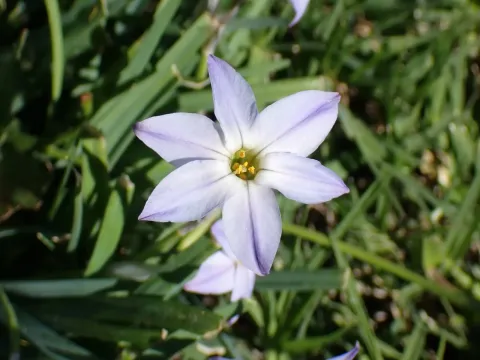
Tristagma uniflorum
Tristagma uniflorum
Planting of Tristagma uniflorum bulbs is typically conducted in the autumn, several weeks before the ground freezes, allowing for successful root establishment.
What the section contains
Tristagma uniflorum
In regions with mild climates, spring planting is also feasible, although autumn remains the preferred timing for establishing a strong root system before the growing season.
The optimal planting depth for the bulbs is between 5 and 8 centimeters, which should be adjusted according to the soil texture and density at the planting site.
It is essential to maintain a spacing of 8–10 centimeters between bulbs to provide sufficient room for the plant to spread and form dense, decorative clumps.
The chosen site should be sheltered from strong winds and intense direct sunlight, as the culture thrives best in environments with dappled or filtered light.
Tristagma uniflorum belongs to the Amaryllidaceae family (formerly classified within the Liliaceae) and is a delicate perennial bulbous plant that demands well-draining soil.
The plant requires moderate moisture levels; the soil should remain consistently moist during the active growth phase, as waterlogged conditions lead to bulb decay.
Ideal conditions for cultivation include light loamy or sandy soils with a neutral or slightly acidic pH balance to ensure healthy bulb development.
The plant exhibits moderate frost resistance, thus requiring winter protection with mulch, straw, or pine boughs in areas with cold, harsh winters.
Originating from South America, specifically Argentina and Uruguay, this species naturally adapts to temperate climates without extreme temperature fluctuations.
The primary threat to the health of Tristagma uniflorum is excessive soil moisture, which often triggers the development of Fusarium and basal bulb rot.
Pests rarely affect the culture due to the characteristic garlic-like scent of the leaves, though onion mites may pose a risk during exceptionally dry periods.
During the early stages of vegetation, young sprouts can be susceptible to damage from slugs and snails that feed on the succulent tissues of the plants.
To prevent fungal infections, it is recommended to treat bulbs with a fungicide before planting and to ensure excellent drainage throughout the growing cycle.
Upon detection of any rot, affected specimens should be removed immediately, and the surrounding soil must be treated with appropriate disinfectants to prevent spread.