
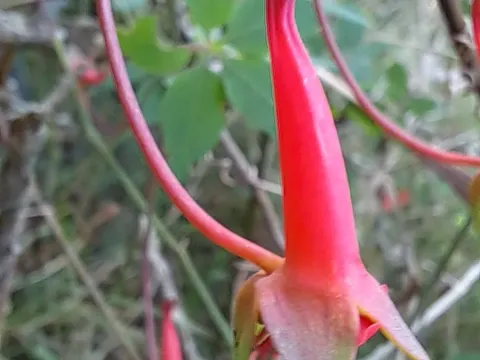
Five-leaved nasturtium
Tropaeolum pentaphyllum
Sowing of Five-leaved nasturtium seeds is best performed in the spring, once all risks of frost have passed and the soil has warmed up sufficiently.
What the section contains
Five-leaved nasturtium
Seeds should be soaked in warm water for about 24 hours prior to sowing to soften the hard outer seed coat and encourage faster germination rates.
It is recommended to plant the seeds at a depth of 2 to 3 centimeters in well-drained, nutrient-rich soil to ensure optimal development of the root system.
Using seedling trays in a greenhouse can provide a head start for the season, allowing the plants to establish before being transplanted into the garden.
Proper spacing is essential as the vine can grow rapidly; planting sites should be prepared with climbing supports or trellis structures in advance.
Five-leaved nasturtium (Tropaeolum pentaphyllum) is a member of the Tropaeolaceae family, naturally occurring in South America including countries like Brazil and Argentina.
The plant thrives in sunny locations but benefits from partial shade during the hottest part of the day to prevent leaf scorching and excessive water loss.
Soil requirements include excellent drainage and moderate fertility, as overly rich soils lead to dense foliage but significantly reduced blooming performance.
Consistent moisture is required during the active growth phase, yet the soil should never remain waterlogged to avoid tuber rot and physiological stress.
As a tuberous plant, it requires specific winter storage in cooler climates; tubers should be lifted after the first frost and stored in a cool, dry place.
Aphids represent the most common pest for this species, frequently clustering on young shoots and buds, which requires immediate intervention during the early season.
Spider mites can become a significant issue during dry summer conditions, causing the foliage to fade and eventually drop if not managed correctly.
Fungal diseases such as powdery mildew may develop if the plant is grown in humid conditions with poor airflow, leading to unsightly spots and stunted growth.
Prevention involves maintaining good garden hygiene, removing dead plant debris, and ensuring that individual plants are not overcrowded in the garden bed.
- Monitoring for early signs of insect infestation.
- Using systemic or contact insecticides when necessary.
- Ensuring proper spacing to improve air circulation.