
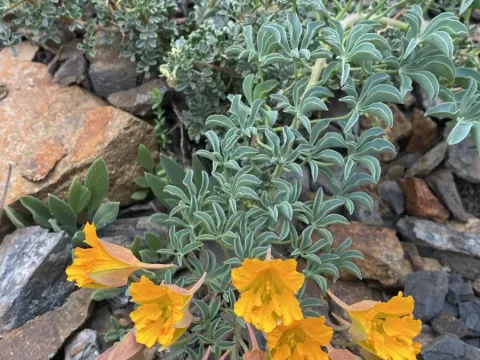
Tropaeolum polyphyllum
Tropaeolum polyphyllum
Sowing Tropaeolum polyphyllum seeds should be carried out in early spring or autumn, depending on the climatic zone and soil moisture levels.
What the section contains
Tropaeolum polyphyllum
The seeds possess a hard coat, so mechanical scarification or soaking in lukewarm water is highly recommended to improve germination rates.
Seeds are sown directly into well-drained, gritty soil at a depth of approximately 2 to 3 centimeters to ensure optimal development.
For container gardening, use a substrate that mimics alpine conditions, incorporating a significant portion of perlite or coarse sand.
Once seedlings emerge, they should be thinned to provide adequate spacing, as the underground rhizomes require room to expand horizontally.
Tropaeolum polyphyllum is a distinctive perennial member of the Tropaeolaceae family, originating from the high-altitude Andes of South America.
The plant thrives in full sun and requires exceptionally well-draining soil, ideally rocky or sandy, to prevent winter waterlogging of its roots.
Unlike common garden nasturtiums, this species is adapted to cooler, drier climates and requires a distinct dormant period with minimal moisture.
Fertilization should be kept to a minimum; excessive nutrients often lead to lush foliage but significantly reduce the intensity of flowering.
The plant is highly valued for its trailing growth habit and yellow, showy flowers, making it a perfect candidate for rock gardens and slopes.
The primary concern for Tropaeolum polyphyllum is root rot, triggered by heavy or waterlogged soil during the plant's winter dormancy phase.
Aphids can frequently colonize the foliage during the peak growing season, requiring prompt intervention with insecticidal soaps or sprays.
Slugs and snails often feed on the tender young shoots, necessitating the use of physical barriers or organic baits to protect the colony.
Powdery mildew may occur if the plants are crowded or if air circulation around the stems is restricted by excessive moisture or weeds.
Maintaining a clean, well-aerated site and ensuring the soil remains dry during dormancy are the most effective ways to prevent pest outbreaks.