
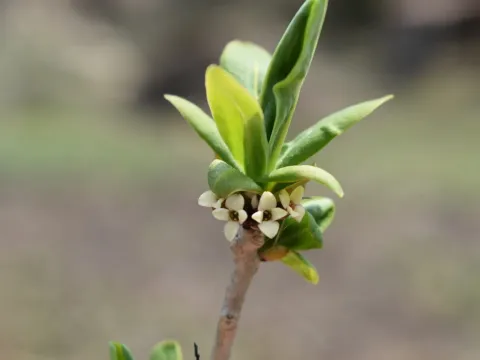
Kamchatka daphne
Daphne kamtschatica
The Kamchatka daphne (Daphne kamtschatica) is a perennial deciduous shrub belonging to the Thymelaeaceae family. It is valued for its unique botanical structure and high tolerance to cold climates.
What the section contains
Kamchatka daphne
Native to the Russian Far East and islands like Sakhalin, the plant naturally grows in understory forest environments. This indicates a preference for filtered light and stable, moisture-retentive but well-drained soil conditions.
When cultivating this species, site selection is critical. The soil should be slightly acidic to neutral and rich in organic matter. Proper drainage is the most important factor, as the species is highly susceptible to root rot in saturated conditions.
It thrives in regions with cold winters and cool summers. In garden settings, placing the shrub in a sheltered location that avoids harsh mid-day sun and strong desiccating winds will encourage optimal foliage growth and flowering.
Safety is a priority when handling this shrub. As a member of the Daphne genus, all tissues contain toxic compounds. Always wear protective gloves when pruning or transplanting, and keep children and pets away from the planting area.
The main threats to Daphne kamtschatica are related to fungal pathogens, particularly in areas with poor airflow or stagnant humidity. Leaf spots and grey mold are the most common issues reported by gardeners in temperate zones.
To prevent disease, avoid overhead watering. Irrigation should be directed at the root zone only. Maintaining sufficient spacing between the daphne and other shrubs ensures adequate ventilation and reduces the risk of fungal proliferation.
Pests are generally minimal due to the plant's inherent toxicity. However, spider mites can occasionally affect the leaves during prolonged dry, hot spells. Vigilant monitoring during the summer months is recommended to catch infestations early.
If chemical control is necessary, use systemic fungicides for infections and horticultural oils for any mite outbreaks. Always test on a small area first, as some species of Daphne can be sensitive to certain chemical concentrations.
Healthy plants are the best defense against threats. Regular mulching with organic compost will improve soil health and vigor, allowing the Kamchatka daphne to withstand minor pressures from pests and seasonal diseases without intervention.