
Lasiosiphon
Lasiosiphon
Lasiosiphon is a genus of perennial plants belonging to the Thymelaeaceae family. These plants are primarily native to the African continent and Madagascar, showcasing a remarkable ability to survive in diverse and challenging environments.
What the section contains


Lasiosiphon
Cultivation of this genus requires exposure to direct sunlight and well-draining soil conditions. They thrive in environments where the substrate is porous, preventing the accumulation of excess water around the root system, which is essential for their physiological health.
The plant exhibits significant drought tolerance, characteristic of many species from arid and semi-arid regions. It is well-adapted to high-temperature fluctuations, making it a robust candidate for xeriscaping and specific horticultural applications.
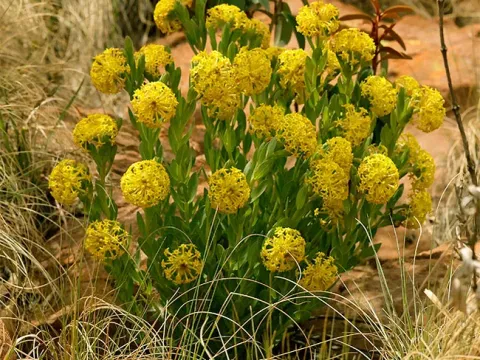
Botanically, Lasiosiphon is recognized by its dense, often spherical flower heads and simple, alternate leaves. The morphological structure of the plant allows it to conserve resources efficiently, ensuring survival throughout harsh seasons.
Economically, certain species within this genus have historical significance in traditional medicinal practices. However, because many plants in the Thymelaeaceae family contain toxins, they must be managed with caution to avoid ingestion by livestock or humans.
The primary health risks for Lasiosiphon include fungal pathogens that manifest as root rot when soil moisture levels remain consistently too high.
Insect pests such as spider mites and aphids are frequently observed, particularly in environments with low air circulation or during extreme dry spells.
Management strategies involve prioritizing site selection with excellent drainage and adequate spacing to promote natural ventilation around the plant canopy.
Chemical control should be applied judiciously, as the plant's medicinal value necessitates the use of environmentally friendly or biological pest management solutions.
Early detection through regular field scouting is critical for maintaining the vigor of the plant population and preventing the spread of diseases.