
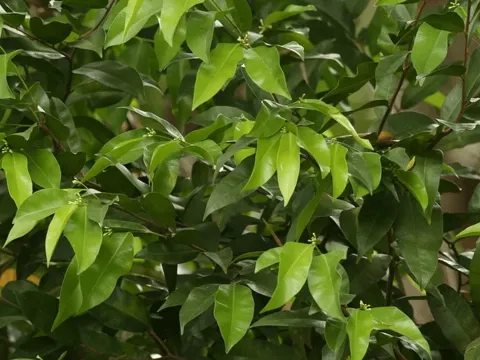
Gyrinops
Gyrinops
Propagation of Gyrinops on a commercial scale is primarily achieved through seeds or cuttings in specialized nurseries. Seeds have low germination rates, so they are sown immediately after collection in a nutrient-rich, high-humidity substrate.
What the section contains


Gyrinops
Before sowing, seeds are often soaked to stimulate germination, as the hard seed coat can delay embryo emergence. A greenhouse microclimate with temperatures consistently above +25°C is essential for successful seedling establishment.
Young seedlings require gradual acclimatization to outdoor conditions during the first few months. Pricking out into individual containers is performed once 3-4 true leaves have developed.
Transplanting to the plantation site is best timed with the onset of the rainy season to ensure high survival rates. A spacing of at least 3-4 meters between rows is necessary to provide adequate air circulation and space for growth.
For the first two years, seedlings require protection from direct sunlight through temporary shading. This prevents leaf scorching and excessive moisture loss from the root system during the early development phase.
Gyrinops belongs to the Thymelaeaceae family and is native to the tropical rainforests of Southeast Asia. This evergreen tree thrives in humid tropical environments characterized by high annual rainfall.
The crop is highly demanding regarding soil quality; it requires well-drained, nutrient-rich soils with a slightly acidic pH. Waterlogging at the roots is a critical stress factor that can lead to rapid plantation failure.
Optimal temperature ranges for active growth are between +22°C and +32°C. The plant is sensitive to sudden temperature fluctuations and cold winds, which limits its viable cultivation area to specific tropical zones.
Light levels significantly impact tree metabolism; therefore, Gyrinops typically grows in the dappled understory of the forest. In artificial plantations, balancing light exposure is crucial to ensure steady growth without thermal stress.
Nutrient requirements are highest during the active growth phase, making the application of complex organic fertilizers beneficial for root development. Regular mulching of the tree base is highly recommended to maintain soil moisture.
The primary purpose of cultivating Gyrinops is to obtain wood infected by specific fungi, which triggers the production of a valuable resin known as agarwood or oud.
Yield is measured not by timber mass, but by the quality and quantity of resinous deposits. Since natural resin formation takes decades, modern growers utilize artificial inoculation techniques to induce production.
Injecting specialized stimulants into the trunk triggers the tree's immune response, leading to the formation of defensive resin. Economic returns are generally expected 7-10 years after the start of intentional inoculation.
The final product quality depends heavily on the intensity of fungal colonization and the duration the resin is allowed to accumulate within the trunk. Experienced growers evaluate yield potential for each tree individually.
Advances in biotechnology allow for better control over the resin-forming process, significantly increasing profitability compared to wild-harvested trees. This makes Gyrinops one of the most economically valuable agricultural crops globally.
The main risk for Gyrinops involves uncontrolled fungal infections that may lead to rot rather than resin production. Strict phytosanitary monitoring is essential to prevent widespread damage across the plantation.
Pests, including stem borers and various leaf-eating insects, can significantly weaken the tree, making it susceptible to secondary pathogens. Regular inspection of trunks is a mandatory practice for maintenance.
Inappropriate humidity levels often lead to root rot, which is difficult to manage at advanced stages. Prevention focuses on maintaining optimal soil drainage and precise irrigation schedules.
In high-density plantations, the risk of viral diseases transmitted by insect vectors increases. Immediate removal of affected tree segments is necessary at the first sign of illness to prevent spread.
Wildlife such as rodents may damage the bark of young seedlings, creating entry points for pathogens. Installing protective netting or barriers around young plantings significantly reduces potential losses.
Harvesting is a complex technological process involving selective felling or partial extraction of the most resinous wood sections. Specialists determine harvest readiness based on visual signs and bark coloration.
Tools used during harvest must be sterilized to prevent the introduction of unwanted pathogens into the tree's healthy tissues. Harvesting should occur during dry weather to minimize the risk of secondary rot at the cut sites.
After extraction, the valuable wood undergoes primary cleaning to separate highly resinous parts from clean wood. This process is delicate and requires skilled manual labor to ensure product integrity.
Further processing includes grading based on quality, color, and aroma, which dictates market value. Storing the finished product requires controlled environmental conditions to maintain resin quality.
Properly executed harvesting allows for sustainable tree management, where cautious extraction enables the tree to continue resin synthesis even after the initial harvest.