
Japanese daphne
Daphne japonica
Description
Growing requirements
Japanese daphne (Daphne japonica) is an elegant ornamental shrub belonging to the Thymelaeaceae family. Originating from the forested regions of Japan and East Asia, this plant has adapted to temperate climates with sufficient humidity and well-drained forest soils.
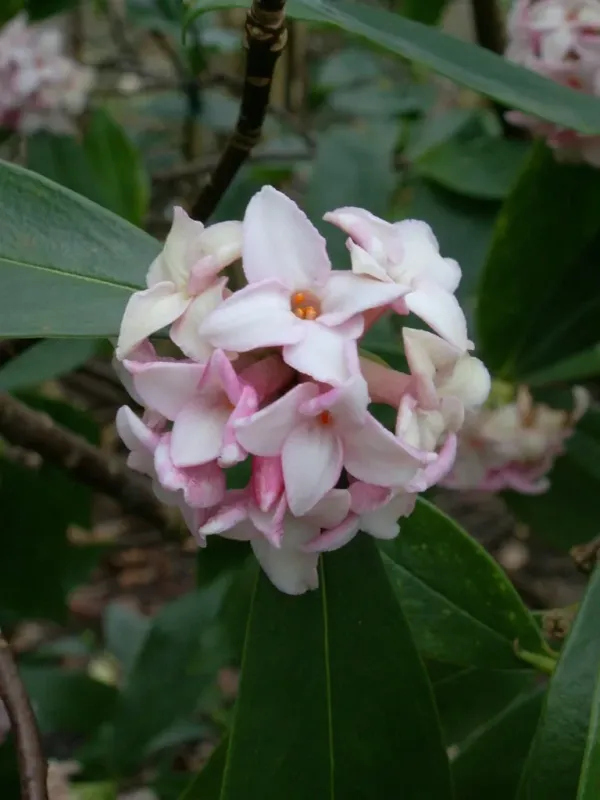
Botanically, this species is noted for its compact growth habit and evergreen or semi-evergreen foliage that provides structural interest throughout the year. The most distinct feature of the plant is its clusters of highly fragrant flowers that appear in early spring, signaling the transition of seasons.
The plant thrives in partial shade, where it is protected from intense direct sunlight that can scorch its leathery leaves. It prefers a temperate climate and requires shelter from harsh, desiccating winter winds, which can cause significant dehydration of the evergreen foliage during the dormancy period.
Regarding soil requirements, Japanese daphne demands a well-drained, fertile substrate with a neutral to slightly acidic pH level. The plant is extremely sensitive to waterlogged conditions, making the inclusion of high-quality drainage material during the planting phase an essential agronomic practice.
Cultivation practices involve regular application of organic mulch around the base to keep the root zone cool and maintain consistent soil moisture levels. Since the plant is sensitive to root disturbance, it is recommended to select a permanent site for planting and avoid moving it once established.
Main diseases and pests
The primary threats to Japanese daphne are fungal infections often triggered by improper drainage or poor air circulation. Root rot and various leaf spot diseases are common, necessitating a focus on preventive soil management and the prompt removal of infected plant tissues.
Pest pressures frequently include aphids and spider mites, particularly in warmer, drier microclimates where the plant's natural defenses may be weakened. Effective control involves regular monitoring of the foliage and the application of appropriate systemic insecticides or horticultural oils when infestations are identified.