
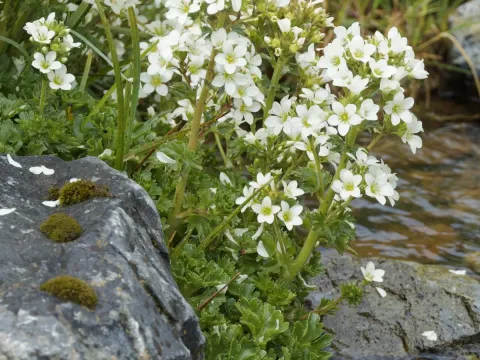
Saxifraga aquatica
Saxifraga aquatica
Saxifraga aquatica, commonly known as water saxifrage, is a perennial herbaceous plant belonging to the Saxifragaceae family. Native to the Pyrenees, this species is uniquely adapted to high-altitude environments, thriving primarily along the banks of cold, rushing mountain streams.
What the section contains
Saxifraga aquatica
The plant features distinct botanical traits, including large, succulent-like leaf rosettes and tall, branched flowering stems. Unlike typical rock-garden saxifrages, this species requires significantly more water, reflecting its evolution in specialized wet habitats near alpine water sources.
Successful cultivation of Saxifraga aquatica requires specific environmental conditions. It demands cool ambient temperatures and a substrate that remains consistently moist but well-drained. Overheating the root zone is a common cause of plant failure in non-native environments.
Regarding soil requirements, the plant prefers a gritty, inorganic mixture similar to scree slopes. It thrives in neutral to slightly alkaline conditions. Providing a constant supply of fresh, aerated water is more beneficial than stagnant, boggy conditions, which can lead to rapid decay.
The primary horticultural application of this species is in specialized water features, such as rock-lined streams or moist crevice gardens. Its ability to tolerate wet environments while maintaining an alpine aesthetic makes it a highly sought-after plant for enthusiasts of mountain flora.
The primary threats to Saxifraga aquatica involve fungal pathogens that thrive in conditions where moisture is present but air circulation is restricted. Damping-off and root rot are prevalent if the planting medium does not offer adequate drainage.
Pests such as slugs and snails are significant threats, as they are attracted to the lush, succulent foliage of the rosettes. Regular physical removal or the use of eco-friendly molluscicides is recommended to prevent extensive damage to the plant structure.
Spider mites can become an issue if the ambient humidity drops significantly or if the plant is subjected to heat stress. Maintaining a cool microclimate with adequate airflow is the best preventative strategy against these infestations during the summer months.
Foliar diseases, such as leaf spot, may occur if water lingers on the leaves during periods of low light or stagnant air. Pruning away damaged or decaying leaves helps maintain the health of the rosette and prevents the spread of infections throughout the plant.
Finally, competition from more aggressive weeds in moist environments can suppress the growth of Saxifraga aquatica. Constant vigilance is required to keep the immediate planting area free from invasive species that might compete for nutrients and space.