
Saxifraga brunonis
Saxifraga brunonis
Description
Sowing dates
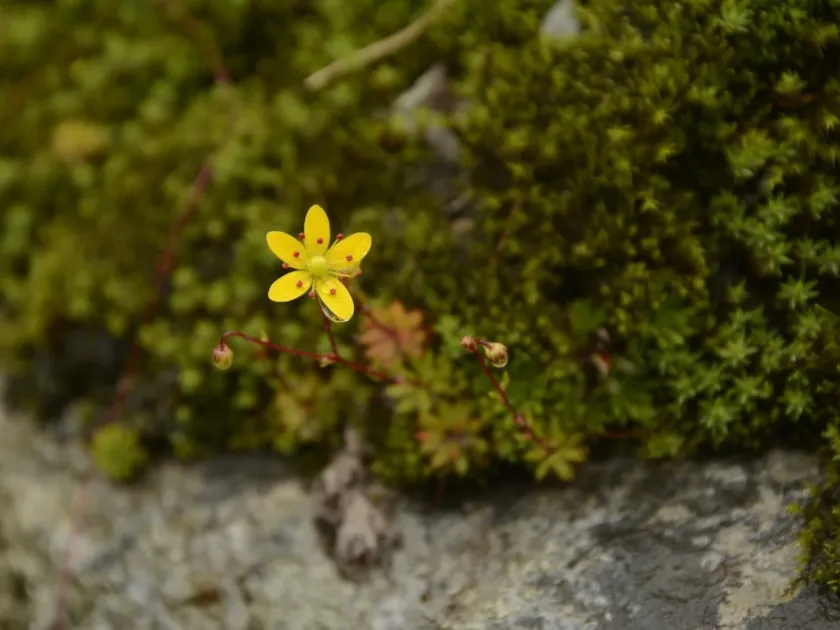
Saxifraga brunonis is a charming perennial herb belonging to the Saxifragaceae family. This species is native to the high-altitude regions of the Himalayas, well-adapted to rocky crevices.
Propagation is typically achieved by dividing established mats in early spring or by rooting the delicate stolons that the plant produces throughout the growing season.
Seed propagation is also common but requires cold stratification for several weeks to break dormancy. Sowing is best performed indoors in late winter to ensure well-developed plants for the season.
When transplanting, care must be taken to maintain the integrity of the root system, as the plant is sensitive to disturbance and needs time to establish itself.
For optimal coverage in landscaping, individual plants should be spaced according to their expected spread, allowing the stolons to weave naturally through stone gaps.
Growing requirements
This plant thrives in cool, alpine-like conditions with bright but filtered sunlight. Excessive heat and direct afternoon sun can lead to leaf scorching and decline.
Soil requirements focus on perfect drainage. A mixture containing grit, sand, and organic matter is ideal to prevent moisture from pooling around the crown.
Maintaining high air humidity is beneficial, especially in warmer climates where the plant might struggle without consistent moisture levels in the surrounding air.
Watering should be done carefully at the base, avoiding overhead irrigation to keep the foliage dry and prevent decay during humid weather.
During the winter, protection from severe frost-thaw cycles is recommended to prevent the shallow root system from being heaved out of the ground.
Main diseases and pests
Root rot remains the most serious threat, usually induced by waterlogged soil conditions or poor site preparation for drainage.
Pests like spider mites and aphids can infest the plants, particularly if they are stressed by heat or lack of proper ventilation in the growing environment.
Gastropods, such as slugs and snails, are attracted to the soft foliage and can quickly defoliate clumps, necessitating the use of deterrents.
Powdery mildew may occur if the plant is grown in areas with poor airflow and high humidity, leading to unsightly white patches on the leaves.
Regular monitoring and physical removal of damaged or diseased portions are essential to maintain the health and vigor of the Saxifraga brunonis colony.