
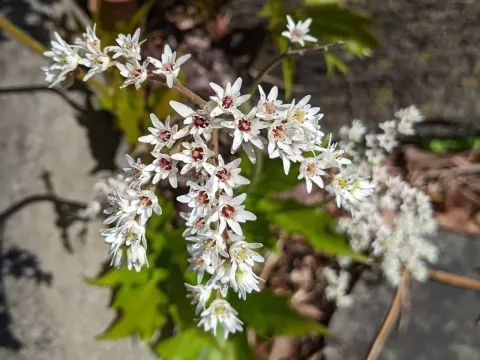
Mukdenia
Mukdenia Koidz.
Mukdenia is a perennial herbaceous plant belonging to the Saxifragaceae family. Native to East Asia, specifically forest regions in China and Korea, this plant is well-adapted to temperate climates with high atmospheric humidity.
What the section contains

Mukdenia
The plant thrives in partial shade or shaded conditions. It is highly recommended to plant it under the canopy of trees or in areas protected from the direct, scorching afternoon sun, which can damage its broad leaves.
For optimal growth, Mukdenia requires rich, well-draining soil with high organic matter content. Water retention is essential, but the roots must not be waterlogged, especially in winter when excessive moisture can lead to crown rot.
Cultivation practices primarily involve maintaining consistent moisture levels. Mulching the area around the plant is a critical maintenance step that prevents soil drying and protects the rhizomes from temperature fluctuations.
In landscaping, Mukdenia is valued for its dramatic foliage transitions. Its leaves emerge bronze, turn green in the summer, and finish with a vibrant red or crimson color in the autumn, making it a staple for woodland gardens.
Mukdenia generally possesses strong resistance to common plant diseases. However, in poorly ventilated gardens with overly high humidity, fungal infections such as leaf spots might occasionally appear on the foliage.
Slugs and snails represent the primary pest threat to this plant. These mollusks are attracted to the succulent foliage and can consume significant portions of the leaves, thereby compromising the plant's aesthetic appeal.
Effective management of these pests involves using snail barriers, traps, or molluscicide pellets. Maintaining a clean garden bed by removing leaf litter and weeds can also reduce the habitat for these harmful pests.
Disease prevention is achieved by ensuring good air circulation and avoiding overhead watering. Keeping the foliage dry helps to inhibit the germination of fungal spores and keeps the plant healthy throughout the season.
Integrated pest management strategies are sufficient to protect Mukdenia. By balancing soil moisture and monitoring for early signs of damage, gardeners can successfully grow these perennials with minimal chemical intervention.